EPISODE 18
Is Music Something You Buy, or Something You Do?
Recording producer Lolly Lewis on why music was never meant to be owned
with Lolly Lewis | recording producer & founder, Amateur Music Network
Grammy-winning tenor Nicholas Phan sits down with recording producer Lolly Lewis — founder of the Amateur Music Network and the engineer behind the majority of BACH 52's own aria sessions — to ask why we've come to treat music as a product instead of an experience, and what gets lost when we do.
Lolly has spent her career on both sides of that divide: as a producer, turning fleeting performances into files you can own and replay; and through the Amateur Music Network, building programs that open the door for people of every skill level to sing, play, and stand inside the music as it happens — never to be repeated in exactly that way again. Her conclusion is simple and a little radical: the experience that can't be owned might be the only kind of value that was ever real to begin with.
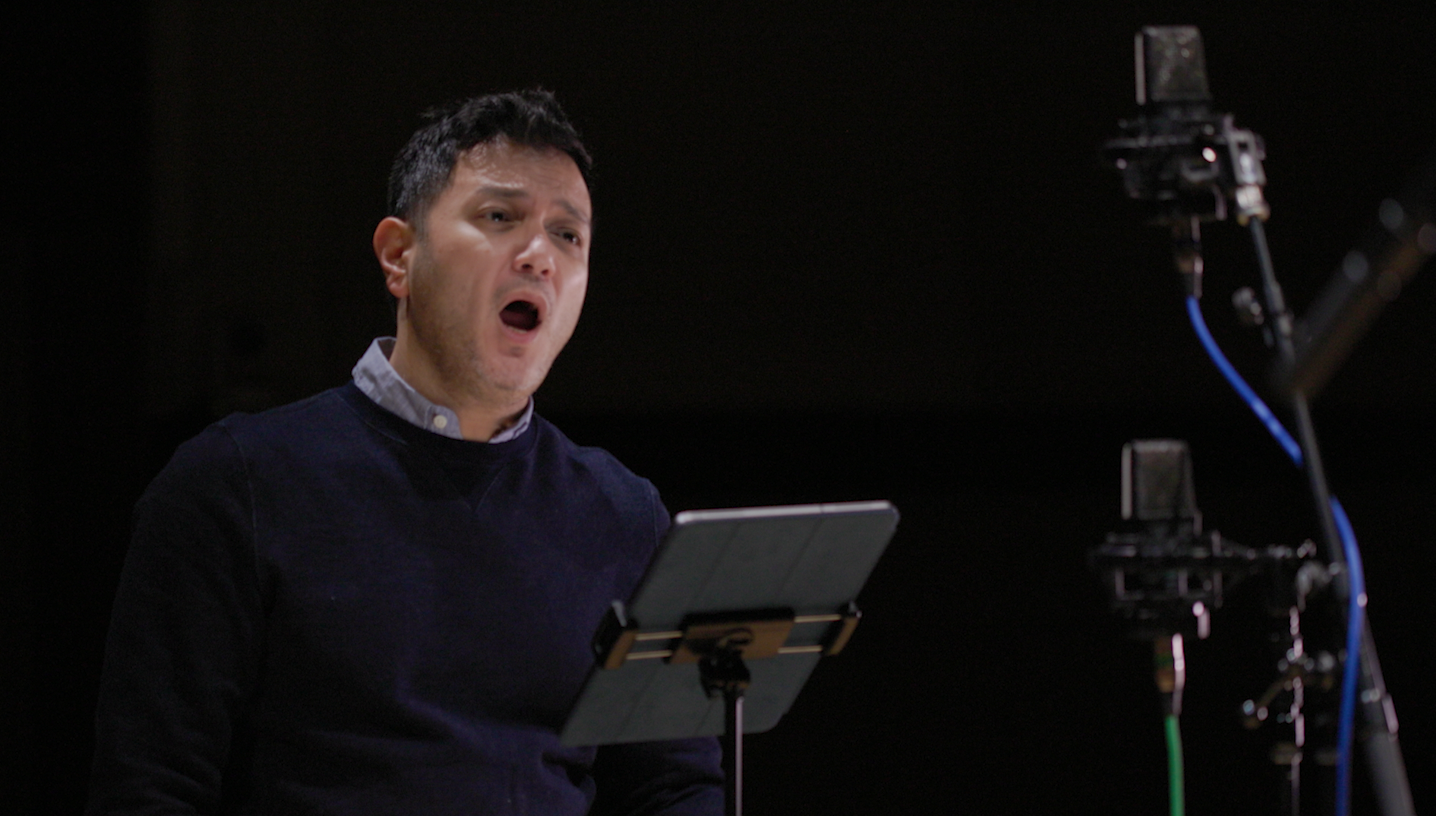
The episode closes with the tenor aria from Bach's Cantata 26, "So schnell ein rauschend Wasser fließt" — a meditation on time slipping away, scored with restless, cascading lines passed between flute, violin, and tenor. Bach, who lived through an era when life expectancy hovered in the mid-30s and lost half his own children before adulthood, knew exactly what this aria is naming.
ARIAS
So schnell ein rauschend Wasser fließt from BWV 26
PERFORMERS
San Francisco Conservatory of Music Baroque Ensemble | Elisabeth Reed & Corey Jamason, directors
with members of Philharmonia Baroque Orchestra
Violin: Carla Moore*
Flute: Stephen Schultz*
Cello: Samantha Adams
Organ: Corey Jamason
*denotes member of Philharmonia Baroque Orchestra
SOUND (BWV 26 only): Lolly Lewis | VIDEO (aria & primary interview only): Clubsoda Productions
This project is a fiscally sponsored project of FRACTURED ATLAS.
To find our more information and to make a TAX-DEDUCTIBLE donation to support the continuation of this project please click the button below
TRANSCRIPT
[00:00:00] F BARRON: Yeah. Is the music of Bach for everyone?
[00:00:03] S OKPEBHOLO: I think Bach is meant for everybody.
[00:00:05] F BARRON: You know, there's a lot of perspectives that classical music is elitist, and in many ways it is in terms of the performance practice or the, the experience sometimes of going to particular venues, et cetera.
[00:00:16] S OKPEBHOLO: You can come from it from an elitist point of view, like, you know, you know, you have to understand counterpoint, you have to understand harmony.
[00:00:23] Yes, I guess if you look at it that way, it's, it's hard for everyone to connect to it because it's very Western, it's very specific style.
[00:00:31] R WILLIAMS: People frame music in such a way as to say, "I don't think you're gonna be interested in this, so I'm not gonna show it to you." Or for the media in general to say, "Yeah, but classical music is only for this sort of people, so...
[00:00:45] And it's not cool. And so, uh, we're not gonna do that. We're gonna show you this because that's popular and easier for us to explain."
[00:00:54] F BARRON: Sometimes we have this insecurity just as humans that we need to understand something in order for it to make sense or to get it, and I, and I think that's, like, just a false assumption.
[00:01:08] There are lots of things I enjoy, and I really don't understand them at all. You know? Or, or like the, the, the mechanics behind a phenomenon or the metaphysics of how something is or, you know, there's lots of phenomenon and experiences of life that we actually really know nothing about on an individual level.
[00:01:23] It might be outside our intellectual purview or this and that, but it doesn't mean we can't, um, have a deep experience with it.
[00:01:28] R WILLIAMS: He, he would have found it very confusing the idea that in the future there might be some people to think, "Well, only certain, uh, certain sort of people have the intellect, uh, the intellectual capacity to appreciate this properly."
[00:01:40] I think he'd have thought that was rubbish.
[00:01:42] S OKPEBHOLO: If I, if you take it from the, fr- fr- from the point of view that, um, it's for everyone in the sense that the purpose behind which it was written was honest, was storytelling, was for us to, um, you know, learn, um, you know, whether it's a sacred idea or just humanity in general, I do think it's for, for, for everyone.
[00:02:07] F BARRON: It's important to allow yourself to have a personal relationship with whatever the music is that you're listening to, and I frankly can't think of a reason why it wouldn't be for everybody.
[00:02:25] N PHAN: Hi, I'm Nick Phan, and this is Bach 52
[00:02:34] We tend to measure the value of things by how long they last. A house outlasts a vacation, a recording outlasts a concert. And so we build our economy of meaning around permanence. And anything that vanishes the moment it happens gets categorized as less meaningful, less worth our investment, less valuable.
[00:02:54] The result of this kind of thinking is that we end up treating music as a product to be sold and consumed. That may give music a value our capitalist society recognizes, although barely worth pennies in this age of streaming, but it's also made most of us into passive listeners. Most of us have lost touch with what it means to live inside the music itself, creating the sounds, experiencing it as an active participant, not just receiving it.
[00:03:23] Lolly Lewis, a recording producer and the founder of Amateur Music Network, sits right at the meeting point of those two ways of relating to music. As a producer, she's the person in the booth capturing performances so they can last, turning something fleeting into a file, a recording, and when she's making commercial recordings, transforming it into a thing you can own and replay.
[00:03:48] In fact, she's recorded the audio for the majority of Bach 52's aria sessions. But through the Amateur Music Network, a San Francisco nonprofit she founded to pair amateur musicians with professional mentors, she spent years building programs that make playing, singing, and making music accessible to everyone, regardless of skill level, opening the door back into that active, participatory experience, standing inside the music as it happens and disappears in real time, never to be repeated in exactly that way again.
[00:04:24] Lolly's conclusion is that music was never meant to be a thing we buy. It's a thing we do. And the experience of doing it together, in a room, for however many minutes or hours that will never come back, doesn't lose value because it doesn't last. In fact, it might be the only kind of value that was ever real to begin with.
[00:04:44] Lolly has been one of my closest collaborators on this Bach 52 project, so I hope you enjoy our conversation as much as I did. And as always, be sure to stick around for the aria at the end of this episode, one of the many that she produced the audio for, taken from Cantata 26
[00:05:02] L LEWIS: I'm Lolly Lewis. I'm a producer and engineer, and I'm the founder of Amateur Music Network, and I'm Nick Phan's biggest fan.
[00:05:14] N PHAN: You're so sweet. So thank you for doing this.
[00:05:19] L LEWIS: Sure.
[00:05:20] N PHAN: I really appreciate it. Um, this is really unique because you've been on all sides of Bach 52, which is kind of cool, so I'm excited you're sitting down with us.
[00:05:28] L LEWIS: Thank you.
[00:05:28] N PHAN: Yeah, yeah. So let's start off. We always start off with this question. How did Johann Sebastian Bach enter your life?
[00:05:36] L LEWIS: Do you know what? I don't remember, and I think that's something that is- that keys into what I've been thinking about with Bach. It's that it's the eternal verity. You know? There's something about Bach that is just at the center of things and very... It's always been there. I don't quite know how to describe it.
[00:06:07] Why is Bach different from other composers? There's something so essential and eternal about this music that really just stands alone.
[00:06:21] N PHAN: Well, I'm gonna have to ask you to say more about that.
[00:06:26] L LEWIS: Well, it, you know, I felt I didn't realize how emotional Bach could be. I've always felt it was a little austere and sort of structurally perfect, and in a way that it, the essence of non-Romanticism.
[00:06:49] It just- It's sui generis. You know, it's just this, i- it's almost like there's not a person there. It's that music. It's not about the composer. It's about this... It's almost like entering some kind of incredible cathedral. It just exists, and always has, and
[00:07:16] N PHAN: y- Yeah, there's something about him where it's like he was this channel for something else.
[00:07:20] L LEWIS: Don't you think?
[00:07:21] N PHAN: Yeah.
[00:07:22] L LEWIS: So I've been thinking about just coming to talk to you about Bach and, and that quality for me has changed a lot since I've been listening to so much of his music, particularly with Cantata Collective and Bach 52, that there's, there's more there than I've you know, understood in the past certainly, and just that it's this incredible o- ocean of all the qualities that we find in music.
[00:07:59] It's not just structurally amazing. It's not just connected to our emotions and our humanity in a way that I think is singular It's just that it keeps growing for me Mm. And I recorded, um, Bill Skeens' Bach Suites a few years back, so that was a big enterprise emotionally for me. Because, you know, the thing is it's speaking in all languages.
[00:08:38] N PHAN: Mm-hmm.
[00:08:39] L LEWIS: Do you know what I mean? It's like, it's wherever you look, there it is.
[00:08:44] N PHAN: Right. So let's back up and s- I mean, how, how did you get into music in the first place, and was Bach a part of that? I mean, I love that you don't remember because that's kind of... Right, like-
[00:08:57] L LEWIS: It's always been there.
[00:08:58] N PHAN: Right. And it's also like, you know, when we're kids, you like, you just encounter things and you don't realize anything special.
[00:09:02] It's just whatever it is that you've encountered. But I'm just... I'm like-
[00:09:05] L LEWIS: Okay, I have a story.
[00:09:06] N PHAN: Okay.
[00:09:07] L LEWIS: My mom loved Cantata 140. Really loved it. And when we were kids, it was one of the records that we just had on in the background, and I sang it a few times in chorus growing up. It's certainly familiar music
[00:09:30] And when I was in college in Santa Cruz, they had quite an accomplished early music program in the '70s. So Linda Berman Hall and some other really dedicated and, um, knowledgeable performers committed to historical performance. And they, I was singing in, guess what? They did the cantata. My mom had cancer, and I knew she was gonna die soon.
[00:10:07] And she said, "Don't you dare quit school. It's not that far away. It's just Santa Cruz. You can come up." And but she had, we had said our goodbyes. Oh, wow. And I knew it was really close. This is a story you might not use entirely, but I'll tell it anyway. So- Please do ... I'm in Santa Cruz. I have the world's worst bladder infection.
[00:10:31] Oh. I'm so miserable.
[00:10:34] N PHAN: That sounds awful.
[00:10:35] L LEWIS: It was awful. But we're doing this cantata, and it turns out the oboe player was an old, old friend from when I was a little kid. We had, our family and his family were very close, and I hadn't seen him in many years, and he just showed up playing baroque oboe, of all things, in this ensemble.
[00:10:58] I'm singing. I'm, like, you know, in this state. My mom's dying. I'm miserable. But it was, like, this heavenly, heavenly music experience that just took me both out of my own physical situation and my Personal sadness about my mom Mm ... beyond, it, it was like she was there Mm ... I was there, the world was there in s- singing this incredible cantata, and listening to the beautiful duets.
[00:11:40] N PHAN: Mm.
[00:11:40] L LEWIS: You know?
[00:11:41] N PHAN: Mm-hmm.
[00:11:42] L LEWIS: Just I still remember this transcendental experience.
[00:11:49] N PHAN: Wow. It's amazing how these experiences with music, we're so lucky.
[00:11:55] L LEWIS: Yeah.
[00:11:55] N PHAN: You know? It sounds like something that both took you out of it, but also, like, helped you process- Can ... wherever you were. Yeah ...
[00:12:01] L LEWIS: exactly.
[00:12:02] N PHAN: Which you can't process unless you're actually feeling the feelings in the moment.
[00:12:06] L LEWIS: That's, that's right. That's right. It did help me. It's so connected with my memories of her and my sense of peacefulness of her passing, you know?
[00:12:20] N PHAN: Wow.
[00:12:21] L LEWIS: Yeah. Did a note.
[00:12:22] N PHAN: No, that's a beautiful story. Thank you for sharing that. So
[00:12:25] L LEWIS: thank you. You're welcome. I still feel connected to that experience, and I do think that that was sort of a entry for me- Mm
[00:12:37] into the world of Bach's music. I sang a Bach aria on my senior recital in college. Um, you know, so it's not like it hasn't been there. But it's quite recent. In the last few years, I've really started listening differently
[00:13:04] I feel like
[00:13:09] Bach's music is Constructed differently than all other music. And for me, the key to that has been the sequences.
[00:13:26] N PHAN: Mm-hmm.
[00:13:27] L LEWIS: That there are these small elements that grow organically. It's almost biological that the, the music spins and grows and evolves in a way that's almost like watching a plant growing You see these tendrils, you know, and the, and the leaves and the, and the maturity of the piece and the bloom of it.
[00:13:58] N PHAN: Mm-hmm.
[00:13:59] L LEWIS: And then it winds down and concludes in a way that is also like a living thing.
[00:14:06] N PHAN: Right. Yeah. It's... There is a biological organic quality. Don't you think? I mean, that's also partly like, you know, these things about vines and sort of... It just, it's a very baroque aesthetic too, right? I mean- Well,
[00:14:18] L LEWIS: that's
[00:14:19] N PHAN: really true
[00:14:20] so it's like very much comes out of the time. It's interesting. In some of these conversations I've been talking with some people about how as we, you know, in our age as we're sort of starting to see these like enlightenment structures and the fallacies that, you know, that are embedded in them in terms of, you know, simple binaries and, you know, logic and reasoning and it h- we're seeing these things fall away a little bit and, you know, the...
[00:14:44] We're acknowledging that the world is a lot messier than we, we previously wanted to admit. And there's- That's
[00:14:49] L LEWIS: right ...
[00:14:50] N PHAN: there's a lot of gray and there's something about, you know, that naturalness of that, that kind of aligns with this baroque- Yes ... aesthetic that he is really hanging on to in a way.
[00:15:01] L LEWIS: Yes. And I think for us right now in that, in that zone of having to come to terms with a world that we thought was maybe more stable than it really is, having Bach's music is really, uh...
[00:15:25] It's really important. It's like I can hold onto that, something that really seems eternal. Mm-hmm. Again, going back to that sense of stability of this music.
[00:15:38] N PHAN: I think it's part of... You know, the, the story you share it's, you know... That's such a messy moment in life too. I mean, it's like such a big life transition and, you know, so often with those life transitions when it rains it pours.
[00:15:51] You know, like you were saying, you were unwell and at the same time as you're losing your parents and it's, you know, there's... It speaks to... There's a reason why I think h- that his music speaks to us so specifically in those moments. I mean, do you think it's fair to say that that moment is almost like a before and after?
[00:16:07] L LEWIS: Absolutely.
[00:16:09] N PHAN: Yeah.
[00:16:09] L LEWIS: I also have been thinking about how- Bach stands kind of at the threshold of modern modernity in music. We look, we look at Bach and it feels so settled, but he was looking back at a time that really... His music wasn't settled. It's like he almost invented harmony on a certain level- Mm-hmm
[00:16:40] by codifying, solidifying what had already been happening. It's like the rules didn't exist, and then he wrote his music, and now the rules all exist. And in a certain way we look back as though that is this stable place, but it's, it's a f- it's a funny doorway back to a, back through Bach to the past.
[00:17:08] N PHAN: Well, and even in his time it was not a...
[00:17:10] It was anything but stable, right? Yes, exactly. You know, he was living in a mess. I mean-
[00:17:14] L LEWIS: Totally a mess ...
[00:17:14] N PHAN: lost multiple children and, you know, in, in infancy and childhood and, you know, a lot of them didn't make it to adulthood. It's-
[00:17:22] L LEWIS: Right.
[00:17:22] N PHAN: Yeah.
[00:17:23] L LEWIS: And the world, you know, it, the 18th century was such a maelstrom.
[00:17:30] N PHAN: It's to say the least. Something that... One of the reasons I'm excited to talk to you is because you, you know, you, you're describing these experiences performing his music, but also you sit on the other side so often, you know, on, in a control room or whatever listening to people-
[00:17:46] N PHAN: perform it. And it's, it's a different kind of listening than just being in the audience, right?
[00:17:50] I mean, you're very much a part of the process of creating recordings, and you've been, like, so integral to the process of us filming these arias for this particular project. How do those experiences inform each other? 'Cause, you know, I think you're still active as an amateur singer, yes? And also, how do they, you know, how are they different in particular with this music?
[00:18:11] L LEWIS: I grew up as a fan. Mm. I, when I was a teenager, I loved, you know, the rock bands, and I just wanted to be part of it, and I just wanted to be backstage, and that has never left me. I feel like my work as a producer is so tied up in my sense of wanting to be part of the experience of making music. And as a listener, that active participation has just been, you know, a way for me to stay as close as I can to the level of artistry that I'm not...
[00:18:56] I don't have access to as a performer, but I have access to as a listener. And so I've really honed that skill- Through, you know, all these years of listening critically
[00:19:11] N PHAN: Mm-hmm ...
[00:19:12] L LEWIS: this music has been a- as a listener, again, it's challenging. I f- feel like you don't have the level of emotionality and romanticism that gives you a lot of breathing room to hear through to a performer's motivation or to help a performer Be expressive in...
[00:19:46] Bach is just about those notes
[00:19:50] N PHAN: There is a purity to it.
[00:19:51] L LEWIS: Yeah. And I think that it's taught me a lot in terms of it's both simpler, you know, you're not looking for meaning. The meaning is just the notes. That's true of all of music, but Bach is so pure
[00:20:08] N PHAN: Mm-hmm
[00:20:09] L LEWIS: It's pure in a different way.
[00:20:11] N PHAN: Yeah. It's, like, kind of the pinnacle of the thing you're talking about.
[00:20:13] Don't you
[00:20:13] L LEWIS: think?
[00:20:13] N PHAN: I do. I do in many ways. It's interesting. You know, some people have been talking, and I agree, that, you know, there's a lot of room for interpretation, interpretive freedom in his music. You know, 'cause I mean, he doesn't give you tempo markings. No. And so, like, that can really change the character of a piece.
[00:20:31] But aside from those broad strokes, you're right. I mean, it's so demanding. You have to just give over to the notes that are there at the end of the day. And, you know.
[00:20:40] L LEWIS: I, I have to say, I so admire... It's one thing to play it-
[00:20:44] N PHAN: Mm ...
[00:20:45] L LEWIS: with accuracy, with phrasing, with all the fundamentals in place. But singers have to know the words and mean the words.
[00:21:00] Mm. And that... And given the intricacy, the invariably intricate and, um, and difficult passage work, to have to do both at once, I just imagine your brain kind of explodes.
[00:21:17] N PHAN: It can, yeah. For sure. I mean, it's difficult.
[00:21:19] L LEWIS: But to... But the fact is that the meaning, even though I don't always know what you're singing about, there's something that's coming through in terms of emotional connection that really happens through singing so directly.
[00:21:38] N PHAN: Yeah. Adding the voice to his music, it does, I think, add a special quality that doesn't always come out on the instrumental stuff, which is such genius. But it adds this sort of extra human element to it, which... But again, you can't insert that on it. You can't superimpose it.
[00:21:53] L LEWIS: No, but that's what I mean. You have
[00:21:54] N PHAN: to- And that's what I think you're talk- Yeah
[00:21:55] L LEWIS: you have to find what's actually there and let that...
[00:22:00] N PHAN: Just come through you.
[00:22:01] L LEWIS: Yeah.
[00:22:01] N PHAN: Yeah.
[00:22:02] L LEWIS: And you do.
[00:22:02] N PHAN: Well, thank you. I'm doing my best. It's funny, you already got to one of my questions, which was, is there a specific Bach that cracked something open for you? Yeah. Well- You've definitely spoken to that. Um, you, you did say that you've been listening to it differently over the last f- stretch of time.
[00:22:20] And I mean, you know, we've been working on this project now for, what? Almost four years. Like- Yeah ... has that, has this project been a part of that? I'm curious.
[00:22:27] L LEWIS: Yes, definitely, because I feel more responsibility- Mm ... to the music. On a certain level, I'm a really skilled listener. I- I know that I know how to listen.
[00:22:40] But on another level, I'm not a sophisticated scholar. This music, th- the people who really know it, they're... I remember at the, one of the Cantata Collective concerts and Charles Sherman came up and started talking about, you know, "Remember that, that repeated note? It's like a heartbeat. It's like a clock ticking."
[00:23:01] I'm going, "Yes, that's so amazing that you would know that." I never hear that kind of stuff because I am not a scholar. But I always, I'm, uh, what I'm used to hearing is emotion, 'cause I think music is all about emotion. So I, you know, as a producer, is the artist connecting?
[00:23:21] Speaker 6: Mm-hmm.
[00:23:22] L LEWIS: Is the artist making a genuinely emotional, expressive statement?
[00:23:28] I know the difference.
[00:23:29] N PHAN: Mm-hmm.
[00:23:30] L LEWIS: And I always go to that. And with Bach, it's sort of got a, a different overlay that's like, that's really great, but I, I'm listening for more of the intricate interplay between the elements, because everything's important. There's nothing that isn't primary.
[00:23:53] N PHAN: Right.
[00:23:54] L LEWIS: And that's different.
[00:23:55] That, you know, sometimes you can just say, as long as that melody really soars, we're in business.
[00:24:01] N PHAN: Mm.
[00:24:01] L LEWIS: That's just not true with Bach.
[00:24:02] N PHAN: No, it's really not. Again, the genius in construction.
[00:24:06] L LEWIS: Yeah. I think it really goes to that sense of it standing alone. It stands alone for me.
[00:24:13] N PHAN: Mm.
[00:24:14] L LEWIS: It, it has such a quality of stability in construction that that's what I'm looking for.
[00:24:24] 'Cause if you get it, it just, it just rings.
[00:24:28] N PHAN: Right. So speaking about, you know, sort of expertise, right? And sort of knowledge, you have founded this amazing organization called Amateur Music Network. We're gonna do a fundraiser in this very space-
[00:24:39] L LEWIS: So excited ...
[00:24:40] N PHAN: in a couple of months. I'm excited too. So just, you know, can we talk about that for a second?
[00:24:44] L LEWIS: Absolutely.
[00:24:45] N PHAN: I would love to hear about the inspiration for why you founded it, about the organization's mission for those people who don't know, and also, you know, why you think that work is important.
[00:24:56] L LEWIS: I was so lucky. I got hired by the San Francisco Symphony to run a program of workshops with symphony mentors, and we had about, in five years, we did about 50 workshops, orchestral, choral, and chamber music workshops with artistic staff, members of the orchestra, members of the chorus.
[00:25:21] And we had about 14,000 amateur musicians from all walks of life, from the Bay Area and beyond, come to Davies Hall to play and be coached by symphony musicians. And I watched people's lives get changed, one after another. I saw people come in and say, "I haven't played my clarinet since I was in high school, and I'm gonna take lessons.
[00:25:46] I'm so moved by this sense of re-immersion into my inner life as a musician."
[00:25:58] N PHAN: Hmm.
[00:25:58] L LEWIS: And the coaches said the same thing. I mean, these are symphony players saying stuff to me like, "I forgot how much I love music."
[00:26:08] N PHAN: Hmm.
[00:26:10] L LEWIS: I was very inspired. And the program only lasted five years, but when it was over, I felt so connected to these musicians, and it was people who were very dedicated, and people literally who hadn't picked up an instrument in 30, 40 years.
[00:26:27] Wow. And I realized that we are all musicians. We have something in us, even if it's only the love of listening. Music has the capacity to make us better people and make us better with each other because we share our humanity through listening and performing and playing together and singing together. So I started basically with some of the symphony mentors, we started doing a few workshops, and that was...
[00:27:04] This is our 10th season.
[00:27:06] N PHAN: Wow. Congratulations.
[00:27:06] L LEWIS: Thank you. So we've been doing it for 10 years. We-- During the pandemic, it really exploded because people were so bereft- Hmm ... without being able to come together and, and be together in music. So we did a ton of online workshops. We have some sing-along events. We have some wonderful events, uh, with Sarah Cahill, where there are conversations with musicians.
[00:27:35] Uh, and we have, um, some instrumental workshops, some chamber music workshops. And mainly it's, for me now, there's this sense of How much of a difference it makes for people to be able to have a place in their lives that they share with each other, not online, not, uh, you know, it's not imaginary. It's real.
[00:28:11] And you, it, even if it's just a matter of listening and being active in your appreciation of live music, it brings us to a place of common humanity. And I just feel like right now, that's the most important thing we can do with each other is connect and share our be in a shared world.
[00:28:38] N PHAN: Right. Does Bach come up in this work with amateurs?
[00:28:42] I mean, we're talking about how difficult his music is, and so-
[00:28:45] L LEWIS: Exactly. It, we did in the first few years of Amateur Music Network, we did some workshops with the Symphony Chorus and sang some Bach chorales and motets and stuff in the, in Davies Hall as part of, uh, a chorus concert. They invited the amateurs to get up and sing.
[00:29:07] And we're doing s- more of that. We have a workshop coming up with, um, a little, uh, group called the Nebula Consort, and I don't think we're singing Bach on this one. But on the last one, we invite the audience to participate and sing along.
[00:29:25] N PHAN: We've been talking about how difficult Bach's music is, and I just wonder, you know, in the work with Amateur Music Network and the amateurs that you're working with of all levels, is that an impediment?
[00:29:36] Is it an invitation to them? I'm, you know, how does it show up in the work that you guys are doing?
[00:29:42] L LEWIS: It's rare that instrumentalists are gonna bring Bach. It's, it's too difficult-
[00:29:52] N PHAN: Mm-hmm ...
[00:29:52] L LEWIS: for, uh, you know, um, a workshop environment unless the players are really sophisticated. But for singers, there's a lot of Bach that is very accessible.
[00:30:08] The, you know, it's not like it's easy, but You know, B Minor Mass, some of the chorales, and there's, you know, Bach's singing, Bach's music is very congregational. Those cantatas, I love how Cantata Collective has the, uh, invites the audience to join in for the last chorale. Because, you know, for me, it's so wonderful to have a chance to sing together any ch- any chance we get, right?
[00:30:46] Um, Amateur Music Network has done some singing workshops with, uh, Bach, Bach's music in choral situations as singalong material. Um, and certainly we've done Messiah stuff. Everybody does Messiah stuff. But baroque music has this quality of invitation because the, because there's For instance, what we used to tell people when, back in the symphony when we would do these more elaborate choral workshops, was if you don't, if you can't get every note, just get the downbeat.
[00:31:37] N PHAN Mm.
[00:31:38] L LEWIS: There's, there are... W- I said think of it like rock climbing. There's handholds. We gotta have a lot of them, because I need, for my satisfaction, I want people to feel that it's not too hard, that they're invited to have a deeply satisfying musical experience that's legitimately
[00:32:04] At a level that may be challenging, but that they can do it, that they can feel like, "Yes, I sang that." And I don't care if you just sing the downbeat, as long as you're part of this choral experience, y- you know, you get the satisfaction and that sense from the music of... I use the word participation really lightly, but I think that's, it, it's very important to feel active, to feel o- okay.
[00:32:40] Culturally, we have really lost a lot by becoming music consumers, and we, we listen like music's a commodity. We listen to recordings, and we think, "Oh, that's so beautiful. I could never do that." I'll... You know, people don't even try because they feel like those artists are so great, and I could never do that, so I'll just shut up.
[00:33:10] And I think that that's... We've lost so much. Everybody used to play. Everybody used to sing. And, and before everybody had recordings, if you wanted to hear music, you went to the piano and played it and sang. You know f- And to reacquaint people with the basic and fundamental human activity of music-making, and to invite them into a world where nobody is denigrated for not being, you know, Beyoncé or whatever it is, that, that everyone has access.
[00:34:00] You know, if it's just singing in the car, you're a musician. You connect with music in a legitimate way. It's not less than. And I feel like that's so important for us as a culture to reclaim the love of music in each of us, and that it can be shared, that people aren't... You don't have to audition to sing, you know, to sing along in church or, you know, I hope in choral concerts.
[00:34:36] I'm, I'm very committed to, um
[00:34:43] Encouraging artists, presenters who are doing choral concerts to add an element where the audience can even sing along, you know? I think that could be really powerful. Like, what if you went to a concert of Brahms Requiem and after the concert was over, the conductor came out and said, "Okay, we're not gonna do an encore.
[00:35:06] You're gonna do an encore," and they just play the fourth movement and everybody gets to sing. What would be wrong with that?
[00:35:12] N PHAN: I mean, nothing. It would be amazing.
[00:35:15] L LEWIS: You think so?
[00:35:15] N PHAN: Talk about audience engagement, right?
[00:35:17] L LEWIS: Well, right. And you, you, there's just this weird thing that has happened to us where everything is commodified.
[00:35:27] Music is not a thing. It's an activity.
[00:35:32] N PHAN: Mm.
[00:35:33] L LEWIS: It's a, it's not a thing you have, it's a thing you do. And even if all you're doing is listening, it's active. And I am very committed to inviting people to the imaginative world of being a listener.
[00:35:50] N PHAN: To participate.
[00:35:51] L LEWIS: Yes.
[00:35:53] N PHAN: It's funny, I always think it's really strange when people say to me, and people say it all the time, but it always strikes me as strange when they say, you know, they'll say, "What do you do for a living?"
[00:36:01] And I say, "Oh, I'm a singer." And they'll say, "Oh, I wish I could sing." And I'm like, everybody can sing. Yeah. I mean, if you can talk, you can sing.
[00:36:07] L LEWIS: Yeah.
[00:36:08] N PHAN: I think it's, you know, if everybody sounds great in the shower, just-
[00:36:11] L LEWIS: That's right ...
[00:36:12] N PHAN: go to your shower.
[00:36:13] L LEWIS: Go out and sing. I, honestly-
[00:36:16] N PHAN: Yeah ...
[00:36:16] L LEWIS: it w- it's so physical. It awakens a part of you that nothing else can touch.
[00:36:25] N PHAN: Yeah.
[00:36:25] L LEWIS: That's the thing about music. It is, only music goes to the place that music goes to. And we need it. We need to feel that way, and we need to feel that way together is my-
[00:36:42] N PHAN: Classical music institutions in this day and age are trying to figure out, you know, how do we remain relevant? How do we continue to function in this day and age?
[00:36:52] And I mean, do you see your work as playing an important part of that?
[00:36:57] L LEWIS: I, I hope. I think that the mindset of large classical institutional music presenters is really mired in This sense of marketing to the audience, like we have this great thing, we wanna sell it to you. We have to talk about it in a way that has nothing to do with what it is.
[00:37:33] I get so frustrated. You know, I, I'm
[00:37:39] I just feel like there's w- w- it's almost like a circle. They're on, they're, they're so close to being able to touch the world with the power of who they are as these wonderful music organizations, these wonderful artists, and yet it's, it's, uh, on the radio, it's not just KDFC, all of classical r- it's like when you go to the s- symphony, they say, "Now sit back, relax."
[00:38:12] It's like, no, wake up and pay attention. Wake up and, and enter this world of incredible sonority and beauty. It's not to put people to sleep. It's not wallpaper. It's active. And so I would love to be able to help these organizations reframe their
[00:38:45] Sort of notion of what an audience is. An audience isn't just people who buy tickets. The audience isn't just the people who support financially.
[00:38:56] N PHAN: It's the community you're building around that?
[00:38:57] L LEWIS: It's the community and it's the, it's the people who listen. You, why would you be playing except for people to hear you?
[00:39:06] And I think that's been lost a little bit. So I think music is incredibly fun. I can't think of anything more fun than going to a great concert. And it m- you know, I just get very sort of tired of it Being talked about as though it's this very sort of v- you know, you can't walk in unless you read about it first.
[00:39:35] You know? It's not something intellectual. It's not like, what key is this in, and where's the development section, and now we're in the... You know. It's, it's an experience. It's imaginative. It touches you emotionally, and they don't really talk about that, which is frustrating.
[00:39:54] N PHAN: Right. I mean, it... You know, I think all the academic stuff and the structural stuff that we talk about of course is important.
[00:39:59] It's- But it's-
[00:39:59] L LEWIS: I think about it when I'm listening, but that's not why you listen.
[00:40:02] N PHAN: Yeah, right.
[00:40:04] L LEWIS: And I think that that sense of it being an intellectual enterprise on any level is just so self-defeating. So to get people... W- California Symphony does a wonderful thing we've been doing now two years with, um, California Symphony.
[00:40:19] They have an, a little pop-up play along, and musicians can bring their instruments. It's in a public park in the afternoon in the middle of Walnut Creek. And Donato Cabrera, their music director, comes out and sort of coaches and conducts a little excerpt from Beethoven Nine or a little excerpt from Ravel Boléro.
[00:40:39] And people just play for an hour. It's super fun. And, and it gives the people who play connect to Donato and connect to the symphony and feel really more affiliated. The community around gets to watch it happen and say, "Wow, that looks like fun. You know, I have a flute at home. Maybe I'll pick it up." You know?
[00:41:01] There's this sense of infectiousness- Mm ... of welcoming that has to do with people playing together. And I, and I think the, there are tremendous opportunities. So I don't know. I would love that. I would love to help do more of that.
[00:41:19] N PHAN: That's an amazing collaboration you've got going between Amateur Music Network and California Symphony.
[00:41:23] I mean, it's... You're right. It is infectious, and it just invites people to experience the music in a different way and become part of the- Yeah ... community and the organization in a different way. It's really exciting. I mean, I, uh, also, it, it feels very much in line with this tradition of Bach. I mean, this music is incredibly complicated, but like you say, it was, you know, like what Cantat- Cantata Collective does, inviting people to join the chorale at the end.
[00:41:47] This is congregational- It's congregational ... musil- music. Yeah.
[00:41:50] L LEWIS: Yes. I really think that's important. And you know, I'm not a church person. I didn't grow up going to church. But I sang in a church choir for a year, and I realized how- That glue of coming together for some kind of communal moment each week, for me it was because we were singing together, and the, and the whole congregation would sing these hymns at various times during the service.
[00:42:26] And, you know, that is something that we haven't replaced, you know, in a secular world. I'm glad to have a secular world, but I think that we- that's what we can do with music, is connect in these really fundamental ways that remind us that we all are part of a community.
[00:42:49] N PHAN: What have you thought of this Bach 52 Project then?
[00:42:52] You know, you keep working on it, so what continues to draw you to it?
[00:42:57] L LEWIS: you do, Nick. But I've been, it's really been interesting because when you first started, you s- you said the fundamental thing that you want to find out through this project is why Bach? Like, what is so essential? What is so irreplaceable about Bach?
[00:43:19] And so that's been in the back of my mind a lot, and not just for the project, but working with all the artists that I do work with who perform Bach. And it's made me really reflect on this As I've said, this difference about his music, that it is on a certain level, it's the, it's the hub of the wheel.
[00:43:49] N PHAN: Mm.
[00:43:49] L LEWIS: It's that central musical impulse
[00:43:58] That is that stillness at the heart of this gigantic, complicated universe. You know, it's really like walking into a cathedral or, uh, y- you know, a, a forest. A beautiful space that is timeless and peaceful, and resonant for us as humans. Yeah. It's just there, almost like... I mean, obviously it hasn't always been there.
[00:44:33] But in our culture, it is at the center of what our musical vocabulary is all about. And all of, you know, you ta- uh, Bartók, Beethoven, all the great composers talk about why Bach is their inspiration. And I've come to understand the sort of fundamental impulse that we keep coming back to. It's like the, it's like the heartbeat of our musical culture.
[00:45:09] N PHAN: Yeah, it's interesting. Even when he was out of fashion, these composers still went to go study him, you know? Mozart is one who jumps to mind where, like, he was in the middle of this movement that was moving away from that aesthetic. Yes. But then you look at things like the Mass in C Minor, and it's clear that he's just been studying the Mass in B Minor, and he's trying to play with these, you know, contrapuntal concepts in what he's writing.
[00:45:31] L LEWIS: Right. Right. There was music before Bach, and important music before Bach.
[00:45:39] N PHAN: Very much so.
[00:45:40] L LEWIS: But somehow, it's like it took all these strands and created this- place for us that endures, that we can always come back to for the nourishment of what music really means at a-
[00:46:11] For what music gives us through our lives.
[00:46:18] N PHAN: Yeah.
[00:46:18] L LEWIS: You know? I certainly have other composers I'm crazy about, you know. It's not like Bach's the only composer that matters. Right. He matters in a different way, isn't it?
[00:46:29] N PHAN: Yeah. All those people you love and adore are connected to him somehow.
[00:46:32] L LEWIS: Yeah.
[00:46:34] N PHAN: This thing you're talking about in terms of how we treat music as a commodity-
[00:46:37] L LEWIS: Yes
[00:46:38] N PHAN: and sort of like, it's this sort of, this elitification of music- Yes ... if that's even a word. Bach is so central to that in the way. It's really interesting. I mean, you take something like the Goldberg Variations and you look at various pianists who have tackled it. And someone, for instance, who's super mainstream in our world, Lang Lang.
[00:46:56] The reactions to him deciding to tackle something like the Goldberg Variations are super divisive.
[00:47:02] L LEWIS: No kidding.
[00:47:03] N PHAN: And you know, it's, it's about, you know, that's rooted in this sort of intellectual elitism that is associated with his music. And on top of that, it is difficult, you know? And so how do you, you know, how does that play out at Amateur Music Network when you're trying to, you know, get, invite people in to participate in the music as players and as singers, as musicians?
[00:47:29] L LEWIS: Well, we wouldn't have an occasion where something as elaborate as Goldberg's was the subject of a participatory playing situation, not only because it's a solo piece. But we would, I would love to have a conversation with an artist about their experience, their journey with that piece. Maybe people will remember Robin Sutherland, who was a fantastic local pianist, and who played the Goldbergs- So profoundly.
[00:48:13] L LEWIS: The music, I was able through working with Robin and through listening to Robin to hear the depth of emotion that that music provides. It's not intellectual music. It's very, very difficult, and it's structurally incredibly complicated. But the aria that starts and ends it is one of the most profoundly emotional artifact ever in music.
[00:48:50] And you listen to Beethoven Sonata 109, and it's obvious that he has taken that aria as inspiration for another of the most profound emotional statements ever made for a solo piano or for music, period. These are, these are
[00:49:18] The fact that, that we don't all know them, all of us, you know, that you have to be kind of a fan to get into something like Goldberg Variations, you have to be pretty deeply into classical music for it to matter. That's, we could talk about why isn't, why is that the case? But the, the reality is that our reference points in culture are so diverse now.
[00:49:51] People know all this pop music that I have never heard and I know all this classical music that a lot of people have never heard. What brings us together is these experiences. So if we have
[00:50:07] If we can give people a chance to connect with artistry on this level, then it, it gives them entree-
[00:50:21] L LEWIS: into recognizing, again, the capacity within themselves to feel and imagine and experience these incredible Musical... W- I almost call, uh, think of them as emanations
[00:50:44] F BARRON: Mm
[00:50:44] L LEWIS: Like as a performer, and I'm sure you know this, as a performer you need to meet the composer in the notes and allow the composer to say what he intended to say in those notes.
[00:51:03] Because the music is a, you know, the, the score is like a message in a bottle Mm. Can you unwrap that message and convey it from, you know,
[00:51:22] 300 years ago?
[00:51:23] N PHAN: Right.
[00:51:23] L LEWIS: How crazy is that?
[00:51:25] N PHAN: No, it's a very special unique quality about the art form of music. So you don't, those... I mean It's, it's, the way you're describing it, it sounds like you're saying the challenges that Bach's music presents are not necessarily meant to be things that are barriers to entry.
[00:51:43] If anything, they're invitations to get to know it better.
[00:51:46] L LEWIS: Yes. And if you, you know, I'm not a good enough singer to really sing Bach. It requires a certain level of skill. But I can sing Bach chorales, and they are totally beautiful.
[00:51:59] N PHAN: Well, and that's singing Bach.
[00:52:01] L LEWIS: And that's singing Bach, exactly. So, uh, just because I can't sing a Bach aria doesn't mean I can't, as a listener, experience the fullness of that expressiveness and as a community member share in the
[00:52:20] Particular specific beauty and peacefulness that those chorales give us. So there's plenty of opportunity to participate in Bach even if you're not, you know, gonna be playing the Goldberg Variations.
[00:52:37] N PHAN: Right. I mean, I- we need more people to speak like you about music. I mean, come on. I
[00:52:42] L LEWIS: love music so much.
[00:52:43] N PHAN: I know.
[00:52:44] And also-
[00:52:44] L LEWIS: It's everything ...
[00:52:45] N PHAN: but the way you talk about it is very beautiful in terms of how it's potentially life-changing thing. It's a community-changing thing. It's this thing that it's a tool. It's such an important tool for us to stay connected to our humanity and- Exactly ... to each other.
[00:53:01] L LEWIS: That's what I think.
[00:53:03] We have so many distractions. I, I'm not, you know, a Buddhist or anything. I... It's not like I'm... We need to be reminded that we are human, that we share this world with other humans and other, you know, the world is full of experience that is shared. And we have all these messages to the contrary. So anything that reminds us of being together in a shared mind and a shared world is a treasure, and music is the best thing I know to do that.
[00:53:53] N PHAN: That's extraordinary. Thank you for doing this conversation.
[00:53:57] L LEWIS: You're the best.
[00:53:58] N PHAN: You are the best. This project is an experiment, right? I mean, it, it's interesting to talk to you about this actually because, you know, we're talking about music as a commodity and how people consume it. And one of the things that I've been thinking about in relation to this project is how do we...
[00:54:15] And also we're talking about how we engage with music, and how can we engage with music in a more rich and different way. And one of the reasons I, well, wanted to do this is because the way we consume recordings these days is so changed, right? I mean, so rare that people just put on a record and listen to it top to bottom.
[00:54:36] L LEWIS: Right.
[00:54:36] N PHAN: And so I thought, "Well, okay. Let's experiment with this and release this on YouTube, and we can do this." But then there's also a conversha- conversation paired with it that so we can engage with this material in a different- Yes ... way. So I mean, it's interesting to talk to you about it because you, you have a clear understanding of what these parameters or these factors are.
[00:54:56] Yes. And I kind of wonder, you know, what when I described this crazy idea to you, what were your first impressions and, you know- As you've experienced this over the last couple of years, you know- Right ... and been a part of it, like how has that grown?
[00:55:11] L LEWIS: The project has grown so much. The first one we did was at Noe Valley.
[00:55:16] N PHAN: Right.
[00:55:17] L LEWIS: And it was a live concert. It was so much fun. It was a wonderful concert, and had a lot of music that wasn't Bach. So it was like extracting the pieces you wanted to use for the project and pivoting to them. And I, I've... As I said, I, I have been thinking about this. It's informed my listening outside the project as well as watching it become more and more focused.
[00:55:50] I feel like you've-- Because you're such an active performer, you're taking opportunities that come to you professionally, as well as creating them specifically for the project, and that that has sort of blossomed
[00:56:12] N PHAN: Did you think I was crazy when I was like, "We're gonna do 52 arias?"
[00:56:16] L LEWIS: No, because I th- I, I think artists are motivated this way.
[00:56:20] Like, the N- Neue Estherházy Quartet was formed to do all of Haydn's
[00:56:25] N PHAN: quartets. Which is so many more than Bach.
[00:56:26] L LEWIS: So many quartets. And they, and it took them 10 years to, to complete it. And I learned about Haydn. So for me it was like, oh boy, now I get to learn about Bach. And I f- and I really have. It's, it's not that I've been studious about it, but it's been informing my listening.
[00:56:49] And I f- feel like
[00:56:54] You've, you're such a steward of the project of what it is you're I don't think you knew where it was going. Like you say, it's an experiment, but your commitment to the artistic W- the level of art- of artistry in the performances as well as the respect for the artists and the exploration of what makes an artist tick, that's so much the kind of thing that I've always been really attracted to, is that, again, music's not a commodity, it's an activity.
[00:57:44] And the people who do it don't just show up and do it and put it back in a suitcase and go home, you know?
[00:57:50] N PHAN: Right.
[00:57:50] L LEWIS: It's, it's who you are. And so to explore that with artists who you perform with, so you interact with them and commune with them in a space of creating these beautiful performances, and also in a space of knowing each other better and trying to reveal that and mine that for meaning, and sort of give the listener more context and more of these handholds, you know, I, I just value that so much.
[00:58:35] So for me, it's been y- It's the sweet spot for me
[00:58:41] N PHAN: Well, that's amazing. That means a lot. Thank you
[00:58:46] L LEWIS: Let's keep doing it.
[00:58:47] N PHAN: Yeah, we're going to. Don't worry. We're only halfway done.
[00:59:02] Chatting with Lolly about the value of active experience versus passive consumption in music, it had me thinking of the tenor aria from Cantata 26, So schnell ein rauschend Wasser fließt. Living in a time when the average life expectancy hovered in the mid-30s and having lost half his children well before they reached adulthood, Bach knew something about the fleeting nature of time and the value of lived experience.
[00:59:29] It's perhaps one of the reasons he was so prolific in his work. In this aria, Bach meditates on a single image of rushing water, hours collapsing into an abyss, a life that will not slow down for anyone. And he paints that with seemingly endless roulades that are traded off between a flute, a violin, the tenor voice, and occasionally the bass lines in the organ and cello.
[00:59:52] I'm not sure it offers any sort of comfort or resolution, but it's an elegant acknowledgment of the indisputable fact of time running out from under us.