GOT QUESTIONS?
START HERE
Everything you need to explore BACH 52, from what a cantata is to why this music speaks across beliefs and centuries.
Frequently
Asked
Questions
-
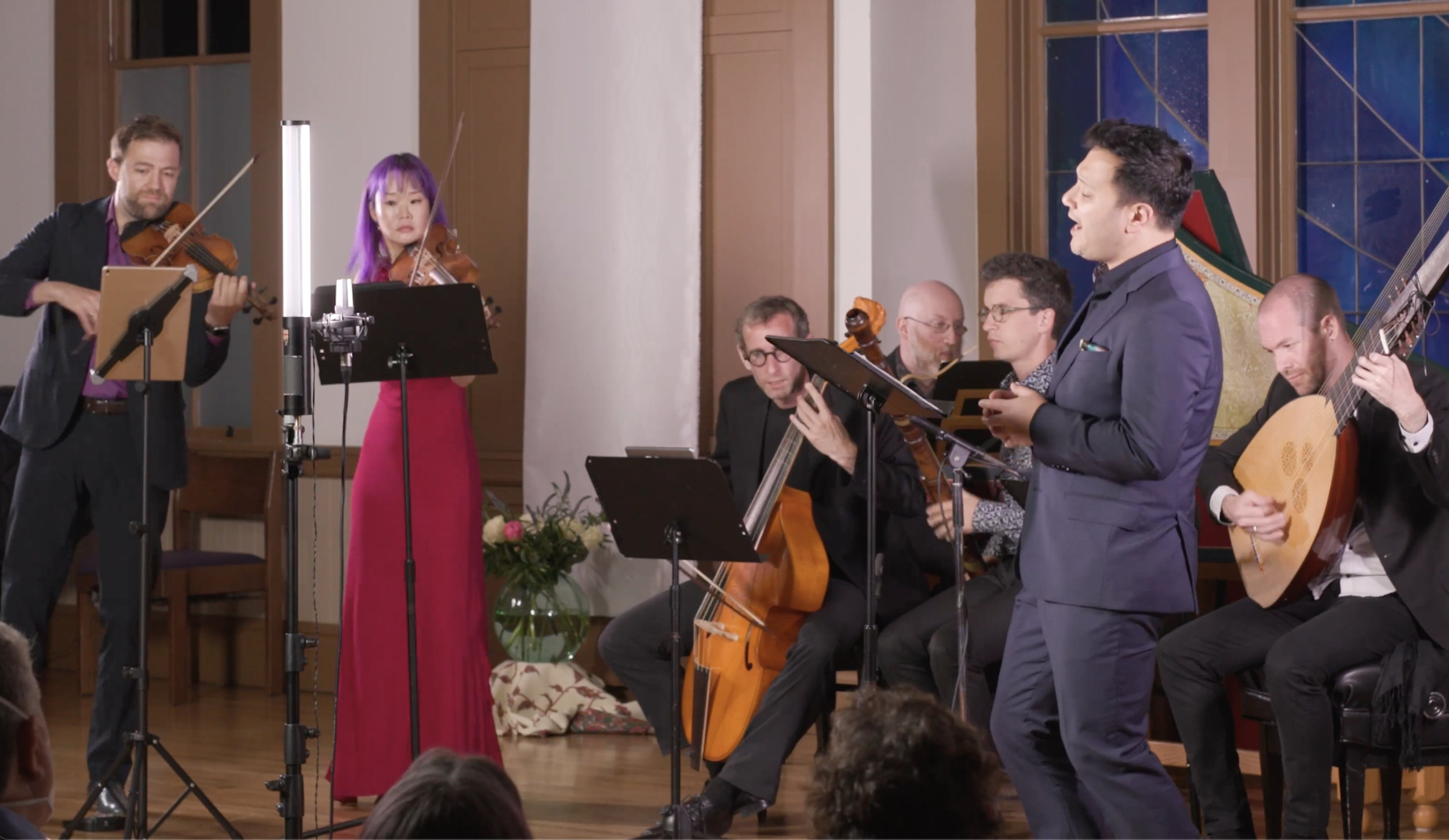
BACH 52 is a web series exploring whether Bach's music is for everyone. Hosted by tenor Nicholas Phan, each of the 52 episodes features a performance of a cantata aria paired with conversations with musicians, scholars, and artists about faith, music, and what it means to engage with Bach across beliefs and centuries.
-
That's one of the central questions we're exploring. Many guests on BACH 52 come from different faith backgrounds or identify as agnostic or non-religious, yet they find profound meaning in Bach's sacred music. We believe Bach's cantatas speak to universal human experiences—mortality, love, grief, joy, community—that transcend any single belief system.
-
Not at all. BACH 52 is designed to be accessible whether you're a lifelong Bach devotee or completely new to his music. Each episode offers context, and our conversations explore why this music matters rather than assuming specialized knowledge.
-
A cantata is a multi-movement vocal work, often with instrumental accompaniment. Bach wrote over 200 church cantatas for Lutheran services in Leipzig, typically lasting 20-25 minutes and featuring arias, recitatives, choruses, and chorales. Each was written for a specific Sunday or feast day in the church calendar.
-
Nicholas Phan is a tenor, so the series focuses on the arias he can perform. This creates a coherent thread through Bach's enormous cantata output while showcasing the remarkable variety within just one voice type.
-
Taking a cue from Bach's own practice of composing cantatas for every Sunday of the church calendar, 52 episodes means that at the culmination of this project we will have a year's worth of exploration—one aria per week (1 year=52 weeks). While episodes aren't released weekly, this structure mirrors Bach's daily work and gives us time to do a truly deep dive into the relevance of his sacred music to today's increasingly secular and diverse society.
-
BWV stands for "Bach-Werke-Verzeichnis" (Bach Works Catalogue), a numbering system for Bach's compositions. Each cantata has a BWV number—for example, BWV 166 refers to the cantata "Wo gehest du hin?"
-
BACH 52 is made possible through partnerships with organizations like Bach Collegium San Diego, Les Délices, Emmanuel Music, and the Tanglewood Learning Institute, as well as grants and generous support from individual donors.
The project operates through a fiscal sponsorship with Fractured Atlas, a nonprofit arts service organization. Contributions must be made payable to "Fractured Atlas" and are tax-deductible to the extent permitted by law.
You can support the project here.
GLOSSARY
Aria
A solo vocal piece, usually lyrical and expressive, often reflecting on the theological themes of the cantata. Arias in Bach's cantatas typically feature instrumental accompaniment that creates dialogue with the voice.
Baroque music
Music from roughly 1600-1750, characterized by ornate melodic lines, strong contrasts, and expressive ornamentation. Bach is one of the towering figures of the Baroque period.
Baroque oboe / Oboe d'amore
Historical instruments that differ from modern oboes in construction, pitch, and tonal character. The baroque oboe has a brighter, more reedy sound; the oboe d'amore is pitched lower and has a sweeter, more mellow tone. Period instrument players describe these instruments as having "more color, more humanity, more emotion" than their modern counterparts.
Basso continuo (continuo)
The harmonic foundation in Baroque music, typically played by harpsichord, organ, and/or cello. The continuo provides both bass line and harmonic support throughout a piece.
Chorale
A hymn tune, often sung by the congregation in Lutheran services. Bach frequently incorporated chorales into his cantatas, sometimes as simple four-part harmonizations, other times as elaborate fantasias.
Church calendar (Liturgical calendar)
The annual cycle of seasons and feast days in the Christian church—Advent, Christmas, Epiphany, Lent, Easter, Pentecost, and Trinity season. Bach wrote cantatas for specific Sundays and holy days throughout this calendar.
Historical performance / Period instruments
An approach to performing early music using instruments, techniques, and performance practices from the time the music was written. This includes gut strings, baroque bows, lower tuning pitch (A=415 Hz rather than modern A=440 Hz), and historically informed vocal techniques.
Recitative
A speech-like vocal style that advances the narrative or theological argument in a cantata. Recitatives are less melodic than arias and more focused on text declamation.
St. Matthew Passion
One of Bach's monumental settings of the Passion story (the crucifixion of Jesus), written for Good Friday services. It's frequently cited as one of the most profound works of sacred music ever composed.
Libretto
The text of a vocal work. Bach's cantata librettos were often written by contemporary poets and draw on biblical passages, Lutheran theology, and devotional poetry.
Want to Learn More?
Explore the complete episode archive to dive into specific themes and conversations, or visit the About page to learn more about the project's origins and goals.