EPISODE 11
A LIVING LABORATORY: Emmanuel Music's Ryan Turner on Bach Every Week
with Ryan Turner | artistic director, Emmanuel Music
What if Bach's cantatas weren't museum pieces — but a living laboratory?
Grammy-winning tenor Nicholas Phan speaks with Ryan Turner, Music Director of Emmanuel Music and Emmanuel Church in Boston, about what it means to perform a Bach cantata every single week of the liturgical year. With that kind of immersion comes a rare intimacy: the cantatas become vernacular, the ensemble becomes a chamber community, and Bach stops being something to approach from a respectful distance.
Ryan traces his journey from singing Cantata 78 as a ten-year-old in El Paso, Texas, to becoming the steward of one of the most distinctive Bach-centered institutions in the world. Along the way, they dig into the questions at the heart of BACH 52: Is Bach for everyone? Can the same music speak to believers and doubters alike? What does it mean to perform sacred works on modern instruments, and what gets unlocked — or lost — when you do?
They also talk about Emmanuel Music's commissioning series, which puts contemporary motets by underrepresented composers in direct dialogue with Bach's cantatas, and about the ensemble's multi-generational model — from seasoned veterans to emerging artists — that mirrors the way this music was originally made.
The music for this episode comes from Bach's Cantata 135, BWV 135 — "Ach Herr, mich Armer Sünder" (Lord, have mercy on me, poor sinner), written for the Third Sunday after Trinity. The recitative and aria for tenor — music of raw spiritual desperation reaching toward consolation — close the episode in performance.
ARIA
Tröste mir Jesu, mein Gemüte from Ach Herr, mich armen Sünder, BWV 135
PERFORMERS
Nicholas Phan, tenor
with Les Délices
Debra Nagy, oboe I & director
Meg Owens, oboe II
Rebecca Landell, viola da gamba
Mark Edwards, organ
Thanks to Julian Bullitt for his photography of the Emmanuel Music Bach Institute events.
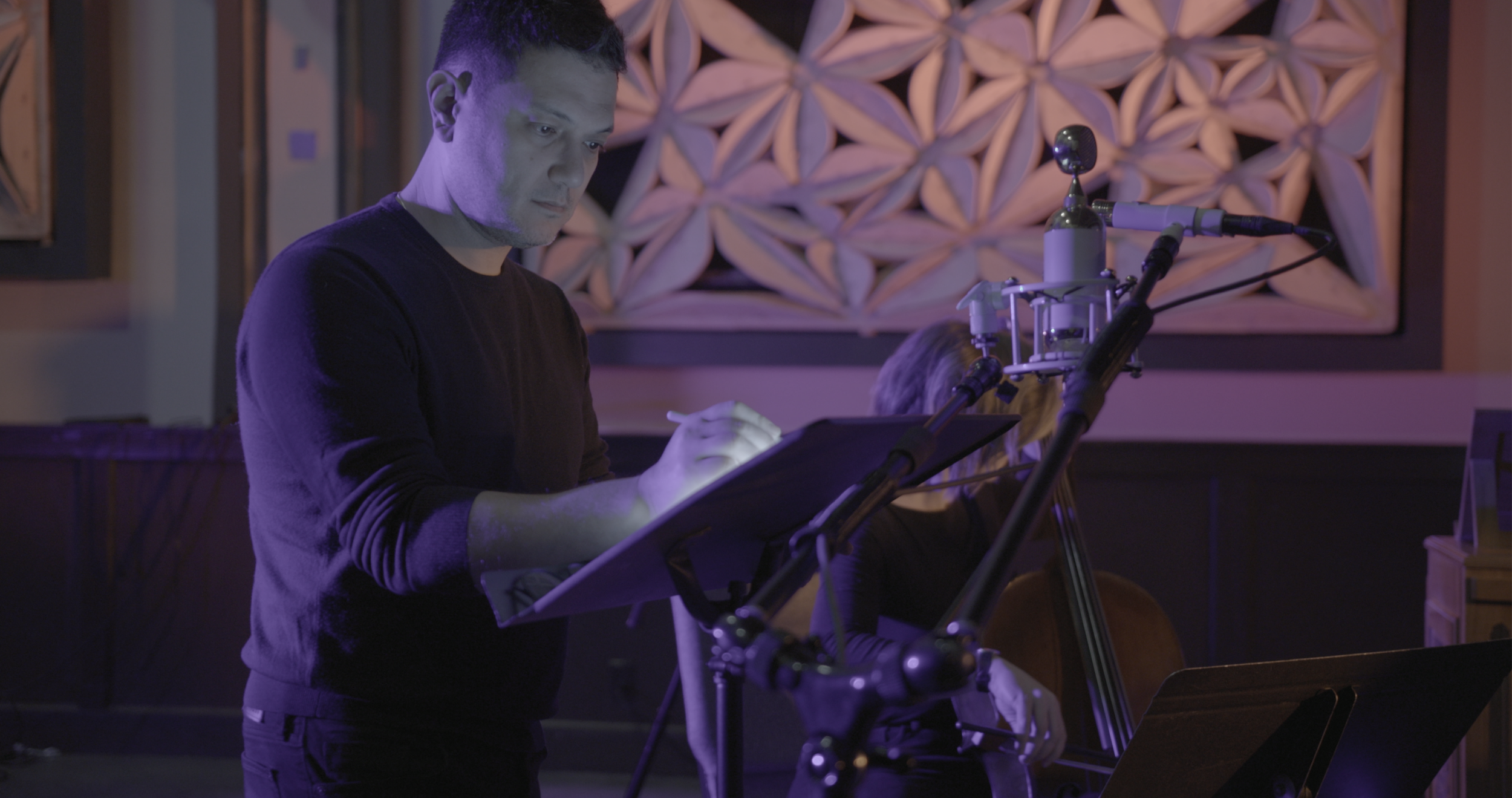
SOUND (BWV 135 only): Joel Negus | VIDEO (BWV 135 only): Clubsoda Productions with Ken Wendt assisting | VIDEO (Interview): Nicholas Phan
This episode was filmed in partnership with Emmanuel Music and Les Délices.
This project is a fiscally sponsored project of FRACTURED ATLAS.
To find our more information and to make a TAX-DEDUCTIBLE donation to support the continuation of this project please click the button below
TRANSCRIPT
[00:00:00] STUDENT 1: I know that I was moved by Bach before I knew what music was.
[00:00:04] STUDENT 2: My first aria ever learned was Geduld from the St. Matthew Passion. It's a really hard one to start with. Um, and I remember it just was so hard. It was, like, the hardest thing I had ever, like, learned up to that point.
[00:00:19] STUDENT 3: What I came to be so inspired by with Bach is the way that he writes for the flute in the oratorios specifically and in the arias from the cantatas because whenever he employs the flute, I think...
[00:00:36] I mean, of course, with all of the obbligato instruments, they're sort of meant to, you know, portray this, like, inner world, right, so to speak, of, like, what's happening under the surface in the text or what, you know, maybe the devoted listener is meant to be sort of speaking inside their hearts when they're listening to the liturgical text.
[00:00:58] There's just, like, a very, a very direct line to something very vulnerable and something very pure-sounding.
[00:01:10] STUDENT 1: You know, I just remember myself sitting and listening to Wiederstehe doch der Sünde for the first time, uh, a cantata that we discussed yesterday, and just being unable to move because of how unbelievably, unbelievably beautiful it was and because I had no idea really what was happening.
[00:01:29] And I don't think you need to know what's happening to be able to be moved by Bach in that way.
[00:01:34] STUDENT 2: But it was also so captivating, and just, like, the fact that it was so hard made me discover that I wanted to do more of it because it was like if something could be this difficult but yet also this rewarding to learn at the end of the day, then there's something of great value here.
[00:01:57] N PHAN: Hello. I'm Nicholas Phan, and this is Bach 52.
[00:02:07] In this week's episode, we wrap up our trio of episodes about Emmanuel Church in Boston, and I speak with Ryan Turner, music director of Emmanuel Music, who shares his journey with the music of Bach, starting from singing his cantatas as a child in El Paso, Texas, to discovering a calling for sacred music while he was in graduate school.
[00:02:27] Ryan reflects on his journey from being an ensemble singer at Emmanuel to becoming music director and how Emmanuel is a sort of living laboratory, as he describes it, for Bach's music and for exploring Bach's cantatas each week, not as museum pieces but as works that speak to our lives today. We also explore how Bach's music can be both historically grounded and universally relevant and how Emmanuel's use of modern instruments and multi-generational performers fosters both access and artistry.
[00:03:00] We also discuss the ensemble's efforts to expand the canon by commissioning contemporary motets so that they can be in dialogue with Bach's sacred works. At the heart of it all is a commitment to community, to inclusion, and to the power of music as a form of shared spiritual and human experience. We start all of these interviews off pretty sort of basically and personally in terms of, you know, how did Bach enter your life, and, you know, what has that journey been like from then until now?
[00:03:34] R TURNER: Gosh. How did Bach... Well, Bach entered my life the very first time singing in the El Paso Children's Choir in El Paso, Texas. I grew up in West Texas, and we did that duet from Cantata 78. So I was probably 10 years old the first time I sang Bach.
[00:03:50] N PHAN: Complicated Bach.
[00:03:52] R TURNER: Yeah. Very co- but fun. Yeah. And we did a... And we went on tour, and so we sang it a number of times.
[00:03:58] It was, like, our big showstopper at the end of the concert. So it entered my life then, and then I kind of forgot about it. When I got to undergrad, I sang a little bit of Bach in my voice lessons, and a little bit, I was a cellist, so I was aware of some of the stuff as a ch- I was a very mediocre cellist I doubt that
[00:04:16] that
[00:04:16] N PHAN: didn't,
[00:04:17] R TURNER: that didn't like to practice.
[00:04:19] N PHAN: That I relate to.
[00:04:21] R TURNER: Y- yes. I always tell the story, I was in the practice room with my cello in its case, and I was singing, and my cello teacher knocked on the door and said, "You'll have better luck if you take the instrument out of its case."
[00:04:33] N PHAN: Is that a turning point?
[00:04:35] R TURNER: Yeah, pretty much. But it was mostly in grad school at the Boston Conservatory. My teacher, Bill Cotton, who incidentally was singing at Emmanuel, was a tenor here. I went in to grad school thinking I was, really wanted a career in opera, and he gently guided me this direction. Realized that it was not an instrument that was really suited for big halls, and I got the bug, and I fell in love with it, and he really guided me towards it.
[00:05:03] At the time, I was singing at Church of the Advent, which is in Beacon Hill. High Anglican. We did Renaissance, full Renaissance mass every service. Great choir. Really fantastic opportunity for me to hone my reading skills.
[00:05:16] N PHAN: Mm-hmm.
[00:05:17] R TURNER: But I always had this feeling like, "Gosh, I really want to sing this place where they do Bach every weekend."
[00:05:23] N PHAN: So you knew of Emmanuel already.
[00:05:24] R TURNER: I did. So I sang there for two years, and I'd gotten a number of calls over those two years from Michael Beatty to sub, and I was never available- Hmm ... because I was at Church of the Advent. And so I, after two years, I put in my resignation and told Michael I was available.
[00:05:45] So I started in 1997 singing Bach here as a sub, and one thing led to another
[00:05:50] N PHAN: And now you're music director.
[00:05:52] R TURNER: Yeah.
[00:05:52] N PHAN: So, I, I mean, what has that journey been like, you know, s- coming in as a sub and, I mean, clearly you, you created the space for it 'cause you wanted to be here.
[00:06:00] R TURNER: As a conductor, I've, and I tell all my students this too, I think the, the best learning tool or the best teacher is being in the ensemble-
[00:06:11] N PHAN: Mm-hmm
[00:06:12] R TURNER: and observing other conductors, as opposed to a conducting lesson. There are skills learned, but in terms of practical experience and living in the ensemble and living with this music, I mean, I had the great fortune of singing next to some of my sort of tenor idols. I mean, I remember having Bill Hite to my right and Frank Kelly to my left as a 20, what?
[00:06:34] 24-year-old, and thinking, "G- how did I get here?"
[00:06:39] N PHAN: Surrounded by legends on either side.
[00:06:41] R TURNER: Yeah. And so learning from them in, in the ensemble, hearing them sing. And also, learned a ton from Craig. Craig and I may have had d- diverged somewhat musically in places, but there was so much of, I think, that is embedded in what I do that I learned from Craig whether I knew it or not.
[00:07:03] You know, I got to work with him for 10 years before he passed away, and some incredibly formative years of my life as a conductor and as a singer. And also, I will say with working with John Harbison as well. And at the same time, sort of in tandem, I was doing a lot of singing with early music groups. So I had this, like, interesting approach that had come back to Emmanuel on modern instruments, and a little different approach to it, but informed by some of the other work I was doing, and I think I spent, and I still have spent time sort of finding the sweet spot between the two of them.
[00:07:37] N PHAN: What is that sweet spot, do you think? Or is it a constantly moving target?
[00:07:41] R TURNER: It's a constantly moving target, but I also, to some degree, I feel like Bach is not of a genre.
[00:07:47] N PHAN: Mm-hmm.
[00:07:49] R TURNER: It's almost like this f- a sing- to use a singer term, a Fisch and Phac, right?
[00:07:53] N PHAN: Right. It's a kind of a thing unto itself.
[00:07:55] R TURNER: It is. I don't necessarily think that all the...
[00:07:59] If you're thinking like a string player, all the-- Everything you learn from playing on a baroque instrument, a baroque bow, it might apply musically, but I think as you get to the heart of what Bach is asking you to do, he's still challenging you. It doesn't matter what instrument you're on. He's asking you to do things that might even be outside of what the instrument's capacity is.
[00:08:21] I think what I've come to learn is that it doesn't matter what your hardware is, you still gotta g- get to what Bach is asking you to do.
[00:08:29] N PHAN: Right. It's so interesting that he's so kind of malleable between instruments anyway. I mean- Mm-hmm ... regardless of whether baroque or modern instruments, you know, it's His, his music sounds great in a variety of contexts.
[00:08:44] R TURNER: Well, and I think also you apply so many things you learn on a baroque instrument to a modern instrument. It's not-- They're not mutually exclusive. They live together in a way, and they're informed by one another.
[00:08:55] N PHAN: If anything, the modern instrument should hopefully allow you to do more. I
[00:08:59] R TURNER: mean, there are times even here at Emmanuel where we'll have...
[00:09:03] Trying to recall what the aria was, but Sarah Darling, who's a baroque violinist and modern violist, played-- We had her leading because playing violin, and she had to do an aria, and she, which she played on a modern instrument, and she brought both bows.
[00:09:19] N PHAN: Mm.
[00:09:20] R TURNER: And she started with her modern bow, and then she changed over in rehearsal.
[00:09:25] "Let me try it with the baroque bow." She did it. She's like, "Oh, that's it. I got it. Okay, now I can go back to the modern bow."
[00:09:31] N PHAN: Interesting.
[00:09:32] R TURNER: And she ended up playing the aria on modern bow, but informed by the work she'd done with her baroque bow.
[00:09:36] N PHAN: Right. How wonderful.
[00:09:39] R TURNER: Yeah.
[00:09:39] N PHAN: I mean, it lets you have the best of both worlds.
[00:09:41] R TURNER: Exactly.
[00:09:42] N PHAN: So, I mean, I know that there's an ethos here about having modern instruments, and I mean, surely it's based on just the variety of repertoire that happens besides Bach. But I mean, is there-- Can you talk more about what that ethos is and why?
[00:09:56] R TURNER: I think part of it was born of practicality to begin with.
[00:10:00] It's not realistic to staff a baroque orchestra every week to do cantatas. I mean, you look at even the H&H or Boston Baroque, they often are flying in their wind players. We just don't have them here. The other part of the practicality of it is that we do other repertoire. You know, Harbison, Britten, Stravinsky.
[00:10:20] And I think there is this idea to-- which is the heart of the question that you've been asking people about, is Bach for everyone? And I think that one of the things as we sit here in the Bach Institute, that we-- our ethos is that Bach is for everyone in terms of instrumentalists. That there's an opportunity for a modern player to engage with this music and apply all the baroque concepts that seem right on that modern instrument.
[00:10:46] I also think that one of the ways that I like to engage with Bach and that we do here is trying to give a application of the text and of the music that is current and that speaks to us now. Talked about Bach at Emmanuel as being a living laboratory.
[00:11:09] N PHAN: Hmm.
[00:11:10] R TURNER: Which I really love that term, as opposed to it being a sort of museum piece.
[00:11:16] N PHAN: Interesting.
[00:11:17] R TURNER: That is, you know, trying to recreate something from the past. But my approach to Bach is l- what does this mean to us now, and how can we make this relevant in our daily lives?
[00:11:28] N PHAN: Right. I mean, that's the thing about music for me, and, and we talked about, about this at the panel discussion, that is so different from other art forms.
[00:11:36] I mean, it really requires people with like- A human, yes ... heartbeats and you know, living in a time to bring it to life.
[00:11:43] R TURNER: Yeah, and this idea of how does it change every time you do it. I mean, you know that as a singer, right? You- Yeah ... I mean, I'm sure all the St. Matthew Passion evangelists you've done, every one is different.
[00:11:51] N PHAN: Every one is different.
[00:11:52] R TURNER: And I look at when I come back to a cantata, which now I'm at fortunately at a stage where I get that incredible opportunity to revisit a con- Cantata 78, which we're doing with the fellows next week, and I've probably conducted it now five or six times, and every time it's different, and every time I find something new.
[00:12:08] When you were singing yesterday, there was a harmony in the aria that I had never noticed. I've conducted that piece probably four times. Right. And in the moment, I was like, wow, I didn't know. You know? Yeah. You hear different things, and that sense of discovery and constantly... I think you said this, like the m- the way the indication of a, a good work of art is that one which grows over time and challenges you.
[00:12:35] I don't know if those are your exact words, but it was something like that.
[00:12:37] N PHAN: Yeah.
[00:12:37] R TURNER: And I think that's what we get to encounter every week with Bach. It's constantly learning something new.
[00:12:43] N PHAN: Well, and what a luxurious situation you have for where you get to do it every week.
[00:12:46] R TURNER: Well, yeah. It is. When you have the cantatas sort of as your vernacular, as it were.
[00:12:52] N PHAN: Do you think there's value in having the cantatas be your vernacular versus, you know, the s- like the suites or the instrumental music or perhaps the less ob- obviously religious stuff? I
[00:13:03] R TURNER: mean, I think so be- for a number of reasons. One, I feel like in some ways we get to a unique heart of what Bach was doing when we look at his sacred works.
[00:13:15] N PHAN: Hmm.
[00:13:16] R TURNER: Especially the, well, sacred works that were meant for a liturgical service that may or may not have ever been meant to be performed again.
[00:13:24] N PHAN: Mm-hmm.
[00:13:25] R TURNER: And that we hear Bach working out so many different ideas. And also it's as though Bach was untethered from the demands of an audience. He was speaking to us in a different way, and it l- opened up this compositional palette of experimentation and, you know, really taking things beyond the edge, e- especially with instruments and voices.
[00:13:51] How far can I stretch this instrument, instrumental or vocal, to the ends to express something that I really want to say? And he was experimenting. So I... And then for us at Emmanuel, when we then... Say we go to an evening concert, like in March we're doing St. Matthew Passion. If we have for the, whatever, 24 weeks prior to it been engaging with Bach's music every single weekend, there's a sense of familiarity with the complete oeuvre that we can bring to a St.
[00:14:23] Matthew Passion. And I think also the e- for any ensemble, when, you know, if you look at a, another arts organization that may do a performance of the St. Matthew with- The, uh, you know, superlative players and singers. But that doesn't mean they've necessarily been working together every single week, and that those relationships that are built with ensemble playing and with a discussion understanding of the repertoire, I think is of a tremendous value.
[00:14:51] N PHAN: Yeah, no, I mean, when you come to a large work like something like the St. Matthew, if you've been living in that space, I mean, A, you form these chamber relationships that are so- Mm-hmm ... integral to this kind of repertoire. I mean, your continuo team is like, they're like a string quartet or like- Yeah ... you know?
[00:15:07] I mean, it's it's like a really tight chamber ensemble, so the m- more shorthand they have, better. Mm-hmm. But also, I mean, when you're dealing with kind of the, the text relationship to the music and sort of having a shorthand about that and understanding that that's something to be thinking about all the time as an instrumental ensemble.
[00:15:25] R TURNER: Mm-hmm.
[00:15:26] N PHAN: I don't know, th- that's pretty valuable. I mean, it's, it's interesting in the more secular context doing these things where people sort of drop into the world of Bach, and it's wonderful, but then there's a whole set of challenges in rehearsal that, you know, are clearly different than the ones you're encountering.
[00:15:42] R TURNER: Well, and you often have such a limited time to address-
[00:15:45] N PHAN: Yeah ...
[00:15:45] R TURNER: all that stuff that... My hope is that in our ensemble we've had m- a little bit of luxury of time, even though it's a different piece every week, but we have the luxury of time of engaging with this w- this sort of weekly dialogue we have.
[00:16:01] N PHAN: Right.
[00:16:02] It's interesting to me because, you know, there's something about Bach's music, and, and we've talked a bunch about this this week, that there is this sort of elitism and eruditeness that's sort of associated with it. And I mean, it's interesting you talk about period instruments, for instance, you know.
[00:16:20] When the movement of bringing those back was suddenly en vogue, people like Isaac Stern were, you know... They're, they're taking this music from us and kind of- Hmm ... you know, protesting this. And there was a reaction against it, 'cause it suddenly felt like there was a proprietary, you know- Mm-hmm ... boundaries being set up.
[00:16:35] And you know, now often, I mean, again, in those contexts I was describing, like if I, I go to a modern orchestra that, you know, they play together 52 weeks a year, but they almost never do Bach- Mm-hmm ... and then we're suddenly doing a John or Matthew Passion, they feel intimidated because they think, "Oh, I'm not an, an expert or a specialist in this," as if someone needs to be.
[00:16:57] And you know, for listeners, that can be, you know, there's a sort of barrier to that, too. They feel like, "I'm not qualified to have an opinion about it," or, you know. There's something that sort of just seems kind of... The culture we can put around it because the music invites that kind of study-
[00:17:15] R TURNER: Mm-hmm ...
[00:17:16] N PHAN: and that kind of sort of depth of analysis, it, it can kind of be off-putting, and people feel like they need to be engaging with it in that way.
[00:17:24] But something that I find really fascinating about what you do here is that you ha- you immerse yourselves in that- But for the purpose of opening the doors to the world, I mean, quite literally the world. I mean, you're here on what, Newbury Street? Anybody's welcome to walk in. Mm-hmm. I think the hope is that anybody will walk in.
[00:17:42] You know? And I think that that's a really interesting and unique combination of factors and approaches- Mm-hmm ... with this music. I mean, I don't know how mindful you guys are of that here, but that's what I'm
[00:17:57] R TURNER: noticing. Well, I think we've... It's interesting, I mean, without our relationship with the church, so Emmanuel Music is the ensemble in residence for Emmanuel Church, and my role is I'm...
[00:18:09] Actually, technically wear two hat- hats. One is music director of Emmanuel Church, and the other is artistic director of Emmanuel Music.
[00:18:16] N PHAN: Mm-hmm.
[00:18:16] R TURNER: I don't really see them as two hats. They really overlap. And one of the things about the church, um, there's a big sign, and I think it's even written on our bulletin somewhere, about, "We welcome you wherever you are on your spiritual journey."
[00:18:29] And I think this is such a progressive Anglican church, that there's almost, uh, a tacit understanding that every person there that's in the sanctuary, there, there's a level of unbelief or disbelief.
[00:18:43] N PHAN: Hmm.
[00:18:44] R TURNER: There's a lot of questioning about faith. And so if you can apply that concept to Bach, I mean, we really welcome everybody wherever they are on their musical journey.
[00:18:55] And I think there are so many elements of what Bach is asking us that questions one's faith, but also more importantly, regardless of your religious beliefs or lack thereof, is that it questions things about the human condition that everybody experiences-
[00:19:12] STUDENT 2: Mm-hmm ...
[00:19:13] R TURNER: when it deals with love of neighbor, of hatred, of doubt, of questioning oneself.
[00:19:20] I mean, I think the, all these elements are universal if you take away the religious part of it and just look at it as human stuff. So my hope is that people come in and can find their way to the music in that way, even if the deity is, as I've said before, a stumbling block.
[00:19:38] N PHAN: It's interesting. I, I, th- this, being here this weekend has reminded me, you know, you don't have faith without doubt.
[00:19:46] Hmm. You don't h- in a way, you don't have love without hate. I mean- Mm-hmm ... these sort of, the yin and the yang of everything is kind of necessary for it to be complete. I don't know. It's, it, you have to be willing to engage in this, I mean, questioning space in order to, to be able to embrace both.
[00:20:01] R TURNER: There's discomfort that has to be embraced, too.
[00:20:04] N PHAN: You certainly can't have comfort without discomfort.
[00:20:06] R TURNER: Right. Yeah.
[00:20:07] N PHAN: Tension and release, as they say.
[00:20:09] R TURNER: Exactly. Some of the texts in the Bible, we talked about this briefly, but you know, when we look at the Gospel of John, there's a lot of discomfort there. There's a lot of blame being cast on one, one religious group, and I think, you know, and Bach is- In this case was given a text and said, "Set it."
[00:20:33] STUDENT 2: Mm-hmm.
[00:20:34] R TURNER: And I think it's very interesting not to, not shy away from those difficult conversations to- but to if anything go deeper, really lean into it and figure out where... Why is it uncomfortable for us? How do we encounter that? How do we find those places of comfort? How do we work against the discomfort, and how do we work against the fact that sometimes we're being asked to do things that we're not comfortable with?
[00:21:02] You know, you, you, you're been on the operatic stage. You somehow- It's an
[00:21:06] N PHAN: extremely uncomfortable place.
[00:21:07] R TURNER: It is. That's right. And I think as artists that's what we're asked to do is lean into those places.
[00:21:14] N PHAN: Yeah, I think, I mean, as we all talk about this and as I i- go along this journey with this project, it, it really does force, at least me personally, to own the privilege that...
[00:21:26] of position I have in terms of being a performer- Mm ... that we have as being performers with this music. I mean, it is a privilege, and it's... We're lucky in a way that our job invites us to be asking questions and to sit with difficult and complex answers, if there are answers to be found.
[00:21:49] R TURNER: Yeah, and all the while shrouding ourself in beauty.
[00:21:53] N PHAN: Yes. Exactly.
[00:21:53] R TURNER: Right. It i- e- but every week I, I am gra- I recognize that, like, this, this is my job. This is what I get to do. I mean, I recogn- and I... It is a po- a, uh, a perch of privilege that we're able to do this.
[00:22:12] N PHAN: So you've been music director how long, um, how long now?
[00:22:14] R TURNER: This is my 14th season.
[00:22:16] N PHAN: 14th season.
[00:22:16] R TURNER: Yeah.
[00:22:17] N PHAN: So where do you see this... I mean, what are you proud of first of all, and where do you see this, you know, what are the goals for what's next?
[00:22:24] R TURNER: There are two things right now that off the top of my head I can say I'm incredibly proud of. The first and pr- I think most important is that as we think about this idea of our, as I call it, our perch of privilege, is that over the last few years when we, you know, we all hit this pandemic and then there was also this parallel cultural pandemic that was even more profound than the health one, and it gave us an opportunity to sort of reexamine what are we doing here when we had just as an organization renewed our, in our strategic plan, this, our core commitment to the works of Bach.
[00:23:01] And it... That, that timing was interesting that right before the stuff with George Floyd, Breonna Taylor, et cetera happened, that here we are. We're an organization that renewed our commitment to a dead European white man.
[00:23:13] STUDENT 2: Hmm.
[00:23:14] R TURNER: And I kind of struggled with that when this, all these things happened, and where- what is our place here?
[00:23:20] And one of the things that our founder, Craig Smith, I always felt like he leaned into difficult moments and wanted the music we were doing to have some sort of cultural relevance. And so one of the things that I started doing was, okay, how do we, without veering from the focus on Bach, we can do two things at once.
[00:23:41] And how can Bach be in dialogue with underrepresented composers, voices that haven't been heard? And so we started right before the pandemic, as a result of it, was, was commissioning series. We commissioned five composers to write a cappella motets that are meant to be preluded motets to the Bach cantata.
[00:24:03] N PHAN: Hmm.
[00:24:04] R TURNER: That are in dialogue with the themes of the Bach. But these are contemporary, a very diverse range of composers, some that are established, some that are up and coming, some of unheard voices. And I feel like that has opened up a whole world of, well, of artistic relationships, but also allowing other voices to be heard.
[00:24:25] And I feel really proud that that's what we're doing. And my hope is that this is a, a project in perpetuity.
[00:24:29] N PHAN: Mm-hmm.
[00:24:30] R TURNER: I've always felt that artistic organizations are really good at responding in the moment to cultural crises.
[00:24:36] N PHAN: Yeah.
[00:24:37] R TURNER: But what do they do that's lasting?
[00:24:39] N PHAN: Mm-hmm.
[00:24:40] R TURNER: And so it was important to me that we at least attempted to do something that wasn't just a band-aid.
[00:24:47] And the second thing that I feel very proud of is that one of the things I think Emmanuel Music does really well is our ensemble is a multi-generational ensemble. We have some people that are, you know, right in the, in the peak of their careers and thriving careers. We have some people that are on the, in the twilight of their careers and have this incredible experience that they offer.
[00:25:10] And then we have some up and coming artists. So when I... I think there's an incredible synergy when those sort of three multi-generational artists get together, and what they learn from each other and what they offer each other. And I feel like that's something we do really well. And there's often a... I'm always aware of how can we...
[00:25:28] how are we cultivating the next generation of musicians?
[00:25:32] N PHAN: That's really beautiful. I mean, it's also so much in line with, I mean, what this music was originally conceived of anyway. Mm-hmm. I mean, there were, you know-
[00:25:39] R TURNER: Yeah ...
[00:25:39] N PHAN: children singing every week- Exactly ... and like along with professionals.
[00:25:43] R TURNER: Well, and, and even last, yesterday, so Peggy Pearson-
[00:25:46] N PHAN: Right
[00:25:46] R TURNER: who played the very first cantata in 1970 when she was 18.
[00:25:51] N PHAN: Wow. Um,
[00:25:52] R TURNER: alongside some of our fellows who it was their first time doing this.
[00:25:57] N PHAN: Right.
[00:25:58] R TURNER: I mean, that-
[00:25:59] N PHAN: That's very special.
[00:25:59] R TURNER: Yeah.
[00:26:00] N PHAN: It's in... You, you talk a bit about how like the, you wear two hats, but you sort of see them as one hat. Mm. And there's like sort of a lot of overlap in that Venn diagram.
[00:26:09] I mean, how do you, wearing the Emmanuel Church hat- Mm-hmm ... how do you see the music portion serving that community here?
[00:26:19] R TURNER: Oh, I think it's, it's incredible. And then one of the things that I love working with our director, Pamela Wertz, who's- How the music is in dialogue with the service and it's all part of a whole.
[00:26:30] Without getting too much in the weeds, I mean, one of the challenges as per an Anglican church in 2024 is that they're on a completely different lectionary cycle than was the Lutheran Church of 18th century.
[00:26:40] N PHAN: Interesting.
[00:26:41] R TURNER: So of course, the Lutheran Church of 18th century was a one-year cycle, readings repeated on a yearly basis.
[00:26:48] N PHAN: Mm-hmm.
[00:26:48] R TURNER: That's why you'll see, you know, what, three or four cantatas for the Second Sunday of Trinity that Bach has written.
[00:26:53] N PHAN: Right.
[00:26:54] R TURNER: The Anglican cycle is a three-year cycle of readings. So we take a Bach cantata, and let's say it says, oh, written for the, I don't know, 18th Sunday of Trinity. That reading may not match up with what we're doing here for the readings.
[00:27:07] So sometimes it's a... it can be a, what we call a direct hit where the text of the cantata is locked in with the reading of the day. Sometimes you have to f- you know, there have been times in Lent I did a cantata that was written for the Sunday after Christmas. The text of that cantata locked in with the, with the reading we were doing or was in dialogue with it somehow.
[00:27:26] The other thing is that we don't do cantatas from mid-May to mid-September. We're off.
[00:27:31] N PHAN: Oh.
[00:27:31] R TURNER: So of course, there's a wealth of cantatas that if we did it based on Bach's church year, we would never get to do.
[00:27:36] N PHAN: Right.
[00:27:37] R TURNER: What I really enjoy doing is finding how we can pair the cantatas with the readings of the day and the psalm of the day even.
[00:27:45] So I find that incredibly interesting and challenging at times, especially when I was trying to get through all 200. I'm like, "Okay, how am I gonna fit this cantata in- "... when there's not really a reading?" So I talk with Pam a lot about how, you know, "Okay, well, I wanna do this cantata. I think it'll work on this Sunday, but let me know."
[00:28:02] So we'll talk about it and sort it out. The thing that I find always interesting is this is a church community that is interested in music and interested in these texts and probing deeper. And I remember Pam Ward, she may have told you this when you interviewed her. She thought, "Really? I get to... They're paying me to sit here and listen to Bach?"
[00:28:25] I mean, and I feel that way every week, like I'm getting paid to do this. But, um, it's a congregation that loves music and wants to enjoy it and gets excited when it's a cantata that we've done before, and, oh, it was different this time, and they wanna talk about it. You know, in Bach's time, of course, the cantata was like a musical sermon per se.
[00:28:44] N PHAN: Sure.
[00:28:45] R TURNER: And I think that that's one of the things that we try to do here, and they're... And Pam will often weave bits of the cantata into her sermon. And s- you know, I've heard her one time, "Let me give you a little listening tour or a guided listening tour. These are the concepts you need to be aware of in the cantata when you listen to it later on."
[00:29:03] So she is really good about making sure that the music and the liturgy and everything is in dialogue with one another. It's a congregation that loves liturgy, but it's also a congregation that loves poetry and loves good music. And so there's, there's a sense of and there's an artistic- Um, flow, I would say, to the service.
[00:29:25] There've often been times that people have said, "I came for the music, but I stayed for Pam's sermons."
[00:29:33] N PHAN: Huh.
[00:29:33] R TURNER: Or people that say, "I came for, I came for church, but then I stayed 'cause the music was-
[00:29:40] N PHAN: Was so good ...
[00:29:40] R TURNER: so fulfilling."
[00:29:42] N PHAN: Amazing.
[00:29:43] R TURNER: Yeah. And it's not as... I mean, as you experienced, these are not short services.
[00:29:50] N PHAN: No. I mean, if you're planning on having a 20, 30-minute- Really? That's just- ... piece of music as a really, as a regular part of it, that-
[00:29:56] R TURNER: Hmm ...
[00:29:57] N PHAN: I'm used to that. I grew up Greek Orthodox. Everything's long.
[00:30:00] R TURNER: Oh, did you?
[00:30:00] N PHAN: Yeah. Yeah So I mean, regular church service is 90 minutes minimum, and that's, those, that's the short service.
[00:30:06] R TURNER: Oh, really?
[00:30:07] N PHAN: Yeah. And then I, I think my last question, i- you know, you talked about Craig's desire to make sure that the music was relevant to today. I mean, that's clearly something I think you share.
[00:30:18] R TURNER: Mm-hmm.
[00:30:19] N PHAN: What is it about being in this community that informs that?
[00:30:23] R TURNER: This is an incredibly progressive church.
[00:30:25] Part of their mission is serving those on the margins. So the church here is home to more 12-step meetings every week than any other place in the city of Boston.
[00:30:38] N PHAN: Wow.
[00:30:39] R TURNER: They, on Friday there's Boston Warm, which is a food and shelter for the marginally or temporarily unhoused. There's a program for LGBTQ seniors that every Thursday have lunch together, and there's musical performances that come from, like, Boston Conservatory brings students over and performs for them.
[00:30:58] There's a Boston Common Art, which is a art program for, again, marginally housed-
[00:31:05] N PHAN: Mm-hmm ...
[00:31:05] R TURNER: people. So there, there's something about this place that really is about serving those in need. And my hope is that that's, I mean, the music and what we do as an organization serves, is about serving spiritual needs or musical needs, artistic needs of not only the performers but also the people that come in.
[00:31:26] And I, I f- I feel like there's something about this community that understands this beyond a gig, essentially. This past December when we did this concert, and we collaborated with Boston Children's Chorus but also Cambridge Common Voices, and Cambridge Common Voices is a ensemble of basically college-age and little older students that, um, all use music to celebrate neurodiversity.
[00:31:53] N PHAN: Hmm.
[00:31:54] R TURNER: And, uh, led by Andy Clark, who's the Director of Choral Activities at Harvard. And we, the Britten Hymn to San- wrong piece, sorry. The Britten St. Nicholas. Right. I should remember that, Nicholas. Britten writes in a part for the congregation to sing.
[00:32:10] N PHAN: Mm-hmm.
[00:32:10] R TURNER: So instead of using the congregation, or in our case, the audience, we, Cambridge Common Voices sang.
[00:32:18] And working with them- For me, the process was so transformative and moving. But in some ways, what I found the most moving when we speak about this community of musicians was the way our musicians collaborated and interacted and were changed by this group of neurodivergent musicians. And I f- I mean, I found that whole process to be really touching, and I was admittedly went into it with some trepidation.
[00:32:51] N PHAN: Mm-hmm.
[00:32:52] R TURNER: Not knowing, not knowing what the musical product would be.
[00:32:55] N PHAN: Right.
[00:32:55] R TURNER: Anticipating there was gonna be a ton of spirit and perhaps not a lot of refinement. There ended up being way more refinement than I expected, but also the way our musicians embraced them and also made themselves vulnerable to them, I found really a highlight.
[00:33:15] N PHAN: Well, I think that's something that's unique to this group of people.
[00:33:17] R TURNER: Mm-hmm. I
[00:33:18] N PHAN: mean, I think everybody's capable of it, sure. Or one hopes. But, you know, I come across many people who've been part of this community and part of this musical community specifically, and that's something that they share is sort of an openness and a vulnerability and a, an awareness and compassion and a, and a curiosity about the meaning of what it is that we're doing.
[00:33:42] R TURNER: Yeah. You know, one quick little anecdote. I remember the very first time, this was in 1998 probably. I was a soloist, my first aria.
[00:33:51] N PHAN: Okay.
[00:33:52] R TURNER: And I remember being so nervous, of course, you know? And I still remember that Bill Hite, Frank Kelly, and Gerald Gray, Gerald Gray who's since passed, three of the singers I looked up to were in the choir that day.
[00:34:07] And I thought, "Why, why am I singing this?" And the support that they gave me, I felt like what they did... Usually I would be a little on edge, and I was somewhat... When I was a singer, I was, I was a nervous singer, shall we say. In fact, that's, that's why I think I like conducting so much better is that my job is to enable everybody else to calm down and not worry about me so much.
[00:34:31] Um, but I felt so uplifted by them and supported. I don't think I was ever nervous when I sang an aria at Immanuel because of the community-
[00:34:40] N PHAN: Hmm ...
[00:34:40] R TURNER: of support that they provided, whether they knew it or not. But there was, there was a culture that Craig had created and that I hope I've been able to continue of really lifting each other up and supporting one another.
[00:34:52] And I felt it that day in 1998, and hopefully we still feel it now.
[00:34:56] N PHAN: That's beautiful. I certainly feel it being a guest here, so
[00:35:00] R TURNER: I hope so.
[00:35:01] N PHAN: Yeah. So, so much of our dialogue these days and is so much about... The discourse is about, are we selling tickets? Is it excellent? Is it politically correct in terms of a performative way so that we can check off a box and make sure that we're not gonna get protested at the next opening of whatever?
[00:35:20] Yeah. And, you know, I, it, everything seems so reactionary, and I don't... Like, that's not why I'm in this- Mm-hmm ... and I don't think that's why most of us are in it. And I, I'm really curious, or listen to it, or, you know, fans of it, or whatever. And you have to kind of, I don't know, get people to be comfortable so they can open up and-
[00:35:38] R TURNER: Yeah
[00:35:39] N PHAN: so that we can actually get to, like, some nuance and some emotional reality around all of this and how it's- Yeah ... changing our lives and how we hope it's changing the world
[00:35:49] R TURNER: and... I think what we do here does. I think it's unfortunate. I mean, you saw how lean the congregation was yesterday, which was leaner than usual.
[00:35:56] I think maybe it was weather- It was storm ... January. I mean-
[00:35:59] N PHAN: Post-Christmas ...
[00:36:00] R TURNER: post-Christmas, exactly. Yeah. Like, you know, pe- lot-
[00:36:03] N PHAN: It's like the
[00:36:03] R TURNER: leanest
[00:36:04] N PHAN: time.
[00:36:04] R TURNER: Yeah. A lot of people come twice a year, and definitely not in January.
[00:36:08] N PHAN: Nope.
[00:36:08] R TURNER: I never feel, no matter how tiny that congregation is, that it's futile. I mean, my feeling is, like, like, if if one person is a...
[00:36:19] You know, y- your job is to reach one person. And if we do, then we're successful. And also, even if you don't re- if that one person is w- somebody in the ensemble...
[00:36:31] N PHAN: All the better.
[00:36:32] R TURNER: Yeah. There was a couple that was here for the first time yesterday that-
[00:36:37] N PHAN: Oh, wow ...
[00:36:37] R TURNER: waited to talk to me afterwards, and like, "Do you do this every week?"
[00:36:41] I'm like, "Yeah, you gotta come back."
[00:36:43] N PHAN: Yeah, exactly. It's a resource.
[00:36:45] R TURNER: Yeah.
[00:36:46] N PHAN: Yesterday was my first time doing a cantata in the context of a service. Oh. I've sung Bach in all sorts of churches, including the ones he worked in. I've done it in places where it's not part of a service, but, you know, it is for an audience of nuns in a church in the hinterlands of Germany.
[00:37:04] And, you know, they receive it as a religious rite. But it's not... It's still a concert. I mean, liturgy's, yes, it's a bit of a performance obviously, especially in terms of a high church situation. But it's interesting. You kind of get up on the lectern, and suddenly singing a recit makes a whole different kind of sense than it does- Mm
[00:37:26] when you're singing it in a concert hall.
[00:37:28] R TURNER: Well, that was... I mean, that was obvious in the way you sang that recit, too. Thank you. No, it was, it was great. I look over to my left, and you had the, your iPad on the lectern. But you were basically... You know, you were orating. It felt so incredibly immediate and as though you were- speaking to the congregation
[00:37:48] N PHAN: It's like you release something into the wild and it does what it naturally is supposed to do.
[00:37:50] Like, that's just kind of what it feels
[00:37:52] R TURNER: like. Mm-hmm.
[00:37:53] N PHAN: Which is not... I mean, it's interesting. I mean, I try and, I think we all try, to recreate that in a, you know, more secular stage context or a more secular situation in terms of the way we're presenting it, even if it's in a church. It's just, it was interesting.
[00:38:07] I was like, "Oh yeah, right." All these things that I think it's about, it is really about that because you can see that in this-
[00:38:14] R TURNER: Mm ...
[00:38:15] N PHAN: in this context. So I, I'm... Thank you for that experience. I mean, I really appreciate, A, you having me here, and then also, B, that you took some time to, to chat with me and- Oh,
[00:38:24] R TURNER: happy to
[00:38:24] N PHAN: chat.
[00:38:25] R TURNER: Anytime.
[00:38:26] N PHAN: Yeah, yeah. I appreciate it. You bet.
[00:38:37] The music for this week's episode is taken from Bach's Cantata 135, Ach Herr, mich Armer Sünder. Bach premiered this cantata in Leipzig for the third Sunday after Trinity, which was in June of 1724. There are two readings for that Sunday. The first is the First Epistle of Peter, in which Peter urges the faithful to humble themselves and to cast every anxiety on the Lord, and to hold fast against the prowling devil, and to trust that after a little while of suffering, God will restore them and strengthen them.
[00:39:13] The gospel reading for that Sunday is taken from Gospel according to St. Luke and relates the parables of the lost sheep and the lost coin, and how heaven erupts in joy whenever a single sinner is found and brought back home and into the fold. Humility, dire need, rescuing grace, that is exactly the heart of these two pieces for tenor in Bach's Cantata 135.
[00:39:38] The text for the recitative, which is composed for continuo and tenor, is, "Ah, heal me, you healer of souls. I'm extremely ill and weak. One can even count my bones, so sorely has my hardship, my torment, and suffering affected me. My face is completely swollen from tears, which, like rapid rivers, roll down my cheeks.
[00:40:01] My soul is anxious and fearful with terror. Ah, Lord, why so long?" And the text of the aria, which is composed for two oboes, and tenor, and continuo, is, "Comfort, Jesus, my spirit, or else I will collapse in death. Help me. Help me through your goodness out of the most grievous anguish of the soul, for everything is silent in death.
[00:40:26] There, no one thinks about you. Dearest Jesus, if it is your will, bring joy again to my face." Hope you enjoy this aria and recitative from Cantata 135, and thanks again for tuning in
[00:40:44] MUSIC