EPISODE 1
IS BACH’s MUSIC FOR EVERYONE? An Introduction
with Nicholas Phan | tenor & host
Is Johann Sebastian Bach's music really for everyone? Grammy-winning tenor Nicholas Phan introduces BACH 52 — a journey through Bach's sacred cantatas exploring that question through performance and conversation.
In this first episode, Nick shares his own lifelong relationship with Bach's music: from a reluctant violinist discovering the Double Concerto in D minor at age 11, to a gay biracial singer grappling with questions of identity, belonging, and permission in classical music. He introduces the project's central paradox — that the institutions of classical music have a long history of exclusion, yet the art itself has the power to transform and save lives.
ARIA
Des Vaters Stimme ließ sich hören from Christ unser Herr zum Jordan kam BWV 7
PERFORMERS
Nicholas Phan, tenor
Katie Hyun, violin I
Owen Dalby, violin II
with Ruckus Early Music
Doug Balliett, viola da gamba | Clay Zeller-Townson, bassoon | Elliot Figg, harpsichord | Joshua Stauffer, theorbo
SOUND (BWV 7 only): Lolly Lewis | VIDEO: Clubsoda Productions
This episode was filmed in partnership with Les Délices and Noe Music.
This project is a fiscally sponsored project of FRACTURED ATLAS.
To find our more information and to make a TAX-DEDUCTIBLE donation to support the continuation of this project please click the button below
TRANSCRIPT
[00:00:00] N PHAN: The question we're examining with Bach 52 is basically, do you think the music of Bach is for everyone?
[00:00:06] K HYUN: Yes, absolutely. You know, should I come up with why? I'm like, suddenly I think I wish I had, I wish I had had like two days to think about this.
[00:00:16] D NAGY: It is potentially relatable for everyone on some level. I
[00:00:22] E EXNER: don't think there's anything that's manmade that is for everybody, right?
[00:00:26] I mean, right. I think Bach is for everybody who wants it.
[00:00:29] E REED: Bach. Literally changed the course of my life.
[00:00:32] K HYUN: It is very human like it. It resonates with human nature.
[00:00:36] AUDIENCE MEMBER: Bach stands for an understanding that the universe is in fact an ordered and rational. A place that there really is a deep core of reasonability in the world.
[00:00:57] N PHAN: The Bach 52 project is basically a project that is exploring the question is the music of Bach for everyone? It's kind of this unwieldy unanswerable question that offers a lot of possibility. For exploration.
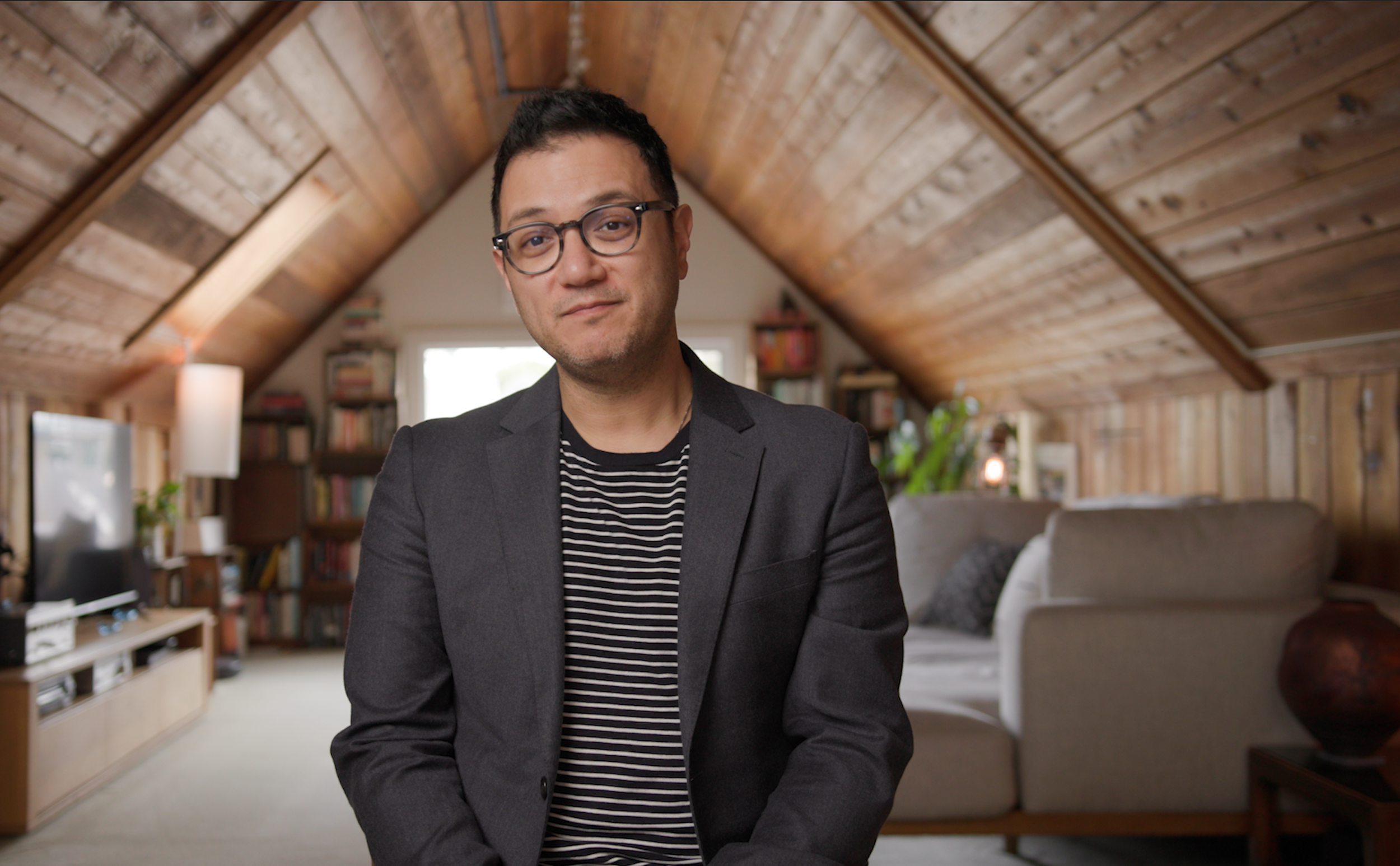
[00:01:18] Hi, my name's Nicholas Phan and I am a tenor that specializes in singing classical music and opera. Johann Sebastian Bach, if you aren't very familiar with his music, was a composer who lived in the 17 hundreds in Northern Germany, and he was. Largely a church musician for most of his life. He is perhaps one of the most famous classical music composers in the repertoire.
[00:01:47] Everybody has heard his music somewhere along the way, even if you don't know that you've heard it. If I played some of his most famous tunes for you, you would probably recognize him. He was prolific in his compositional output. He wrote over 1200 pieces, I think, and a lot of these pieces are. A series of church cantatas.
[00:02:09] Every week at his church there would be a Bible reading. And for every week he would compose one of these cantatas, these pieces that explored the themes of that Bible reading every week. And they would be scored for choir, orchestra, and soloists. And what I'm gonna do is I'm gonna take 52 of the tenor arias from those cantatas and record them and.
[00:02:35] Each time we do that, I'm gonna pair with those recordings an interview with one or more people, musician, musicologist, non-musician, audience member, Bach lover, Bach hater, uh, and pair that interview with one aria a week. One of the questions I wrestle with in my mind is this. Paradox that the institutions of classical music have a really long history of being exclusive, yet the music really has the power to transform a life and save a life.
[00:03:20] The art itself is something that inspires passion in people from all walks of life. There is this adage that music is universal language. And on the one hand that's true. It's something that evokes an emotional response in every single one of us. But at the same time, there's something about that adage that is a white concept.
[00:03:46] It's one thing for a white straight person to walk around and say, music is a universal language when talking about classical music, when that really means a lot of different things. When you're considering who can play it, who has a natural cultural affinity for it, it's interesting the ways in which our implicit biases come out when we actually begin to scratch the surface of that question.
[00:04:11] And as a singer who deals with spoken languages of a wide variety, I'm constantly confronted with the question is that necessarily true? Bach music is. In German, it's dealing with Lutheran texts that have to do with a Lutheran, Lutheran interpretation of the Bible. People ask of Bach music quite often if it's antisemitic.
[00:04:40] People ask a lot of questions about Bach music.
[00:04:46] I started out in music as a violinist. My parents gave me a violin when I was four years old for my fourth birthday. I was not thrilled because I wanted toys and instead I got this thing that I had to practice every day of the week, and it made me lose my recess on Fridays so I could take a violin lesson with my violin teacher.
[00:05:08] But my parents made me do it. They kept me practicing. They said, you have to 30 minute time limit every day. And I studied Suzuki violin, which if you're not familiar with that, is a school of studying the violin that originated in Japan and is. Really intent on developing a sense of love for music and also an ear for music, and it's very prescriptive way of studying music.
[00:05:31] There are books. Each student works through the same set of pieces in each book as you keep progressing and advancing. So I started doing this as a kid. I practiced 30 minutes a day during the time period in which I really hated and resented this. I would set a kitchen timer for 30 minutes, and the minute that timer went off, I would put my violin back in the case.
[00:05:52] And then when I turned 11, I started playing an orchestra, and once I realized you could start making music with other people, I was hooked and I knew that I needed to be a musician. And it was right around this time that I encountered my first pieces of Bach music. One of the first assignments of his music, that's a serious assignment in the Suzuki books, is his double concerto and D minor for two violins.
[00:06:21] And I remember hearing this music and that was the first time as a musician I heard something and I thought, that's a goal that I really want to work towards. And. It became my favorite piece of music, probably through the age of 11 through 14. I listened to it nonstop and I practiced it dutifully. I learned both parts to the first movement, and I was obsessed.
[00:06:45] And as a singer, I've always carried that interest and love for his music. But as a singer, I have to deal with the words and. Bach, vocal music is all liturgical in in some one form or another. For the most part, I'd say 95% of it, if not higher percentage of it is religious in nature. And so I'm constantly grappling with these texts.
[00:07:08] And a few years ago I was interviewed, uh, as part of a documentary that focused on the conductor helmet railing and his life's work, which is centered around Bach music. And. The journalist asked me in the interview, do you think the music of Bach is for everyone? And I found myself really stumped by the question.
[00:07:32] My first initial instinct was to answer, yes, of course, based on that childlike wonder I had about these pieces. But as a singer who's singing these very Lutheran, specifically Lutheran, not just Christian, but German Lutheran. Texts that have to do with death and afterlife and Jesus and Christianity and sin and redemption and forgiveness.
[00:07:58] I found myself struggling to say yes unequivocally, it is for everyone because it's something that's very specific of its time and place and purpose. So it's a question that's been turning around in my mind for a really long time now. I've always wanted to do some sort of exploration about Bach music.
[00:08:18] And I've always thought I should just maybe do an Aria album, but I always held myself back at that because I feel like so many people, so many of my heroes have all made their albums of Bach Arias, and I don't know that we need another one of those without context. This music's changed my life. It saved my life in some instances.
[00:08:44] As a gay teenager growing up in the Midwest who is biracial, I felt like I was isolated and on the outside, I think that me finding a place in the realm of music, a place of belonging, a community, a place that was safe enough to come out of the closet in the mid nineties as a teenager in the Midwest, that I found all through music and in large part through Bach music.
[00:09:13] And so I kind of wonder about how our institutions exclude, but how the art form itself is inclusive even in cases like Bach where it's so specific and it seems on the surface, like it's geared towards just one thing and at the exclusion of other things. And the question is begged of it. Is it anti. It's anything one way or the other.
[00:09:44] It's a dichotomy that I really wrestle with in my mind, and I'm really hoping to explore more in depth with this series. A lot of my work has to do with exploring song as an expression of identity, and I've been doing this and exploring this and sort of scratching at this question for many, many years because.
[00:10:09] As a singer, your body is the instrument, and so it's very difficult to pull away and push past implicit biases. They crop up in really unexpected ways, in particular with singers, whereas with the instrument, if you can play the instrument, you know, for instance, when instrumentalists audition for an orchestra.
[00:10:35] In the United States, most of those auditions take place behind a screen in order to divorce any sort of sense of sight from assessing the person's abilities. Singers don't have that luxury. It's not possible with singers because so much of our job is conveying a story conveying language, and then once you start dealing with spoken language, if you're not a German singer, then.
[00:11:02] The deck is stacked against you. If you're singing German repertoire, can you make the language come to life in the same way as a German singer can? Do you have a German sound? I've seen over the course of my career since I was a young artist, watch people be pigeonholed based on their race, and in some ways I feel like I've worked against that as well.
[00:11:31] I had this really interesting experience 20 years ago. In 2003. I was the, I was the American representative at the BBC Singer of the World Competition, which is kind of like a vocal Olympics. We all auditioned and to represent our nation at the BBC Singer of the World Competition in Cardiff Wales. And when we arrived, you know it, you'd get to the hotel and in the lobby there was a flag from each nation.
[00:12:00] Hanging. It was like you were Miss America at the Miss Universe pageant, which was really cool and very exciting. And for the song Round, the BBC asked us each to feature songs from our country like folk songs, and I found that I had a really, really difficult time with that. I was 24 years old and it was the first time I realized.
[00:12:30] I didn't feel American enough to sing something like Shenandoah or sing, you know, at the River or some Stephen Foster songs, which in essence, I, I realized I didn't feel white enough to sing those things. And conversely, I certainly didn't feel black enough to sing a spiritual, and so I was really left confounded sort of, well, what do I pick?
[00:13:00] To sing for this thing. And you know, as a classical musician, one of the first things that really sprung to mind is something like Simple Gifts. But the arrangement of that by Aaron Copeland, super well known. I can't think of anything more sort of American sounding than that particular piece. And I did not have the nerve to sing that at Cardiff.
[00:13:20] And you know, I lost the competition guy. I walked away with a t-shirt like, and. I also walked away with this sense of disturbance that I didn't feel like I could do that. It really drove home for me how much whiteness is baked into the concept of what it is to be an American. It took me another 12 years before I had the courage to, or 10 years, no, 12 years before I had the courage to program those songs.
[00:13:58] In public for myself and sing them in public in performance. Each and every time I do that, it feels very much like it's a statement because of the nature of my last name. Because of the nature of my identity, and it means that from the entirety of my career, every single time I choose to sing something.
[00:14:24] I have to, I a, feel like I need to prove that I can do it, and B, I'm always asking myself, do I have permission to sing that thing? And so that's where this question for me has been, is any music for everybody and classical music happens to be in the music that I'm most passionate about. I've devoted my life to it, and that is why.
[00:14:55] I am asking this question of a composer that I love the most. He's, I think, perhaps the greatest composers who have ever lived. If I could say that about anybody, I think oftentimes saying anything is the greatest or the best is ridiculous. But he really is someone I venerate as a composer and as a musician.
[00:15:19] I've had the privilege of working with. Some of the greatest Bach experts out there living in our time, and I've had the privilege of singing his music in all sorts of venues everywhere from the churches he, the tiny churches in Germany where he worked during his lifetime to the Kennedy Center and Lincoln Center and the San Francisco Symphony.
[00:15:45] I've, I've had a lot of time with his music. Because those opportunities have been given to me by other people. This feels important because it's not waiting for that permission from somebody else. Also, asking this question of Bach in particular, as opposed to Mozart or Beethoven, nor Stravinsky or any other number of composers, feels significant because Bach, I think for most classical musicians.
[00:16:19] Is the pinnacle. He's perhaps one of the most revered composers in the Western classical music cannon. So to ask this question of his music feels like it has roots and connections to everything that comes after him. Everything that actually comes before him. In some ways, he's a
[00:16:46] significant figure. In the history of classical music, there's a before Bach and there's an after Bach in a lot of senses and there's a lot of mythology that's cropped up around him, partly because we don't know so much about his biography and there's a lot of elevation of his stature on a pedestal in our world.
[00:17:09] So it feels really important to ask this question of his music in particular. We don't know a ton about Bach life because there's not a ton of documentation. He, he wasn't the most communicative of people, you know? His correspondence largely was business related. There's not a lot of diary entries or letters to friends that we have or family members that we have that survive that give us a glimpse into who he was as a person.
[00:17:43] So there's a little bit of mystery around him, but what we do know about him is that he was born in Eisenach, Germany, which is a tiny town in northern Germany, and he spent most of his life living in and working only in that region. The large chunk of his professional life was spent working at the St.
[00:18:05] Thomas Church in Leipzig, which is where he is buried, and he. I had a lot of kids, many of them died young. A lot of them survived. He comes from a family of composers. His fathers and uncles were composers. His sons became composers quite famous in their own right, in their own time. He was prolific in the amount of music he wrote.
[00:18:35] He wrote over 1200 compositions, and there's something about. What he did with music, he pushed the boundaries of harmony and in doing so, kind of set a standard for what is possible that influenced the centuries that followed. He was undoubtedly a genius. I don't know that he would've expected that there would be.
[00:19:07] This amount of scholarship devoted to his music and his work, and I don't know that he would've imagined that it had this kind of universal appeal that it does. I've had experiences with his music that have involved people from, in just one performance, the musicians have been from no fewer than 23 nations and.
[00:19:34] Spanning a range of, a range of a, a range of ages from 19 or 20 all the way up through people in their mid eighties. It's got a pretty impressive draw that I think is not something to be scoffed at or taken for granted. The reason I'm drawn to these church cantatas is. Well, there are a lot of reasons why.
[00:20:04] One of the reasons is that this is the place where Bach was his most experimental. This is where he was toying with different styles, different modes of composition, and he was able to do that because of the weekly nature of this assignment for himself. And he did this three times over the course of his career.
[00:20:27] So there are three years worth of. Cantatas for every week of the church year. Another reason I'm interested in the church cantatas is because it gets at the heart of something that's really central to Bach music. Bach was a person of really, really deep faith, and he signed every single one of his compositions with the initials SDG at the end.
[00:20:53] Which meant Soli Dale Gloria, which is Latin for only for the glory of God. So there's this sense of service in all of his work, whether it's religious in nature or not, that is tied to his faith, which is something I find really fascinating about his music. Studying this music. I always feel this about Bach music, that my singing gets better from studying his music, but having to study it this way in such depth.
[00:21:22] In such detail and quickly, I am noticing that it's an extremely valuable technical exercise. It is really, really forcing me to refine my technical work in an extreme way that I think is actually really beneficial. And I'm noticing that there's a difference in, in the way that I sing other things now based on what I'm learning about.
[00:21:51] My own vocalism through this, which is kind of cool. I kind of always expect that because I feel like you always just continue to learn more the more you sing. But there's something about his music is so challenging. His music has this reputation for being too instrumental and not very vocal, and being very difficult to sing, particularly for tenors, and I don't know that.
[00:22:16] That's totally true. It is very instrumental, but I think there's value for a singer to learn how to treat your voice like an instrument. It's so easy to hyper personalize it because it's a part of you, and so learning to kind of pull yourself away from it and find some objectivity around it is actually a really healthy thing.
[00:22:36] It forces you to think like a musician as opposed to, and think about what do you want to do versus. What are you capable of doing and what feels comfortable? And I think as an artist, if we're just looking for, if our concern is what feels comfortable, then our priorities might be misaligned. In terms of partners and collaborators, there's a real community aspect to all of this.
[00:23:08] A lot of these arias are chamber ensembles. So they're populated with people I know and care about and who are friends or who have been colleagues for many, many years. Or there are organizations like the San Francisco Conservatory of Music where there are students who are just having their first experiences with Bach and that there's an educational value in this experience for them as well as for me, and I'm kind of interested in that because Bach himself was.
[00:23:34] A community servant. He was a church musician. Most of his music was written with a community purpose in mind to celebrate an event or to meditate on the religious theme of the week. He was always a church or in city employee. His music was always for a function, and he clearly had a sense of service in what it was that he was creating.
[00:24:03] By signing every composition composition, Soli Dale, Gloria at the end. So I definitely want to explore that aspect through these recordings and interviews as well. In the interviews, I'm learning a lot about Bach life. I'm always really, really fascinated by the people who answer the question. No, it's not for everybody.
[00:24:30] The people I talk to about this. Project think I am a little crazy for wanting to do this. They say two things. They say, wow, that's a really interesting project. That seems really cool. And they also say, wow, 52 Arias is a lot of Bach Arias. How are you gonna do that? And that's a really good question. This is really unwieldy.
[00:24:56] It's a giant project. It's. I'm gonna take a lot of time. Uh, so far we've recorded 15 of the 52 Arias and filmed those, and we're in the process of putting those together and we're in the process of filming interviews, normally approaching a recording project. There's a formula, you know, when we're making an album, we know exactly what we're doing and we follow that formula and we present this finished product to the world.
[00:25:27] We are. Sort of following a formula here for things that we know, but this is, at least for me, the largest project I've ever attempted. And so there's some learning as we go, and that's kind of cool. I'm learning a whole set of skills I never thought I would need.
[00:25:50] So the aria for this week's episode is taken from Cantata seven, which is. A cantata for the feast Day of St. John and the Bible reading for that particular Sunday focuses on the baptism of Jesus. That moment in art is often depicted as one of the only times the Holy Trinity appears in the Bible. The voice of God.
[00:26:16] Speaks as Jesus is being baptized and the Holy Spirit is often depicted as doves circling above the scene that's happening, and Bach has no exception to this. In this particular aria, which talks about the voice of God appearing, everything is in threes, there's the two violins and the tenor voice, which form a little trio over the continuo, and also the music is composed in threes.
[00:26:44] It's in triple time, and the violins and the voice basically outline triads over and over and over each other, symbolizing the Holy Trinity in the music. The text for this aria is this. God has clearly demonstrated with words and images at the Jordan. The father openly made his voice heard at Christ's baptism.
[00:27:08] He said, this is my beloved son, in whom I am well pleased. From the high throne of heaven for the world's sake, he has come in lowly form and has taken on the flesh and blood of the children of mankind. Now take him as your savior and listen to his precious teaching. The father's voice makes itself heard.
[00:27:30] The son who has brought us with his blood was baptized as a true man. The spirit appeared in the image of the dove so that we may believe without doubt. The Trinity itself has prepared baptism for us.